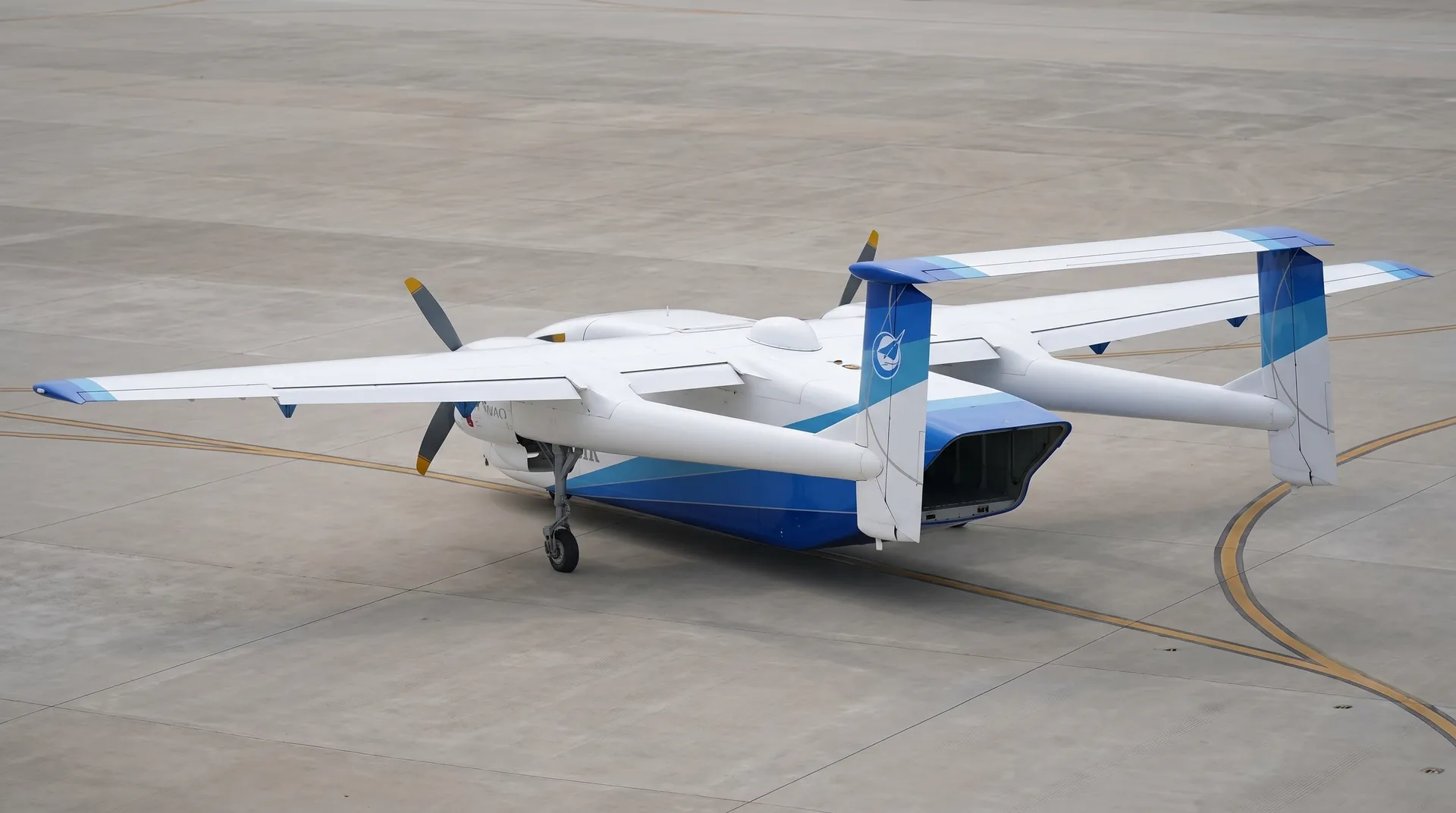
China continues to assemble the infrastructure of a "low-altitude economy" around unmanned logistics. In April, the country hosted the first flight of the HH-200 cargo UAV, which is claimed to be a platform for difficult weather and difficult geography. The design is designed for operation at temperatures from -40 to +50 °C, which is important for routes where conventional aviation is losing its regularity due to climate and airfield restrictions.
The HH-200 has an application configuration for cargo: payload up to 1.5 tons, cargo compartment of 12 m3 with the possibility of expansion up to 18 m3. For regional logistics, this is a level that already allows for the transportation of bulk shipments, spare parts, e-commerce cargo and urgent shipments for businesses. The speed profile is also "commercial": the cruiser is about 310 km/ h and the flight range is up to 2.36 thousand km.
A special emphasis is placed on the accessibility of the sites. The drone is capable of taking off and landing from a 500-meter runway and operating on plateaus above 4,200 meters. Such access opens up routes where the classic "warehouse → highway → regional hub" scheme is too slow or expensive: mountainous regions, island chains, northern territories, as well as border corridors where the speed of closing delivery affects the turnover of goods.
The technological part is announced through "smart management": intelligent autopilot and an AI-based obstacle avoidance system. In addition, the use of composites reduces the weight of the machine by about 20%. In the life cycle, the manufacturer provides 50,000 flight hours or 15,000 takeoffs and landings, that is, the device is designed for intensive daily operation, and not for rare demonstration flights.
Application scenarios extend beyond the domestic market. The plan outlines cross-border and inter-island transportation in Southeast Asia, as well as participation in the air cargo networks of the countries of the Belt and Road Initiative. An important signal about the formation of a new layer of logistics: air delivery "between hubs" without full-fledged airport service, when a short flight lane, autonomy and predictability are critical.