The platform accepts applications without first requesting a commercial offer: the user specifies the pick-up and delivery points, and the system instantly outputs the price and estimated delivery window. Payment is made by bank card directly on the website.
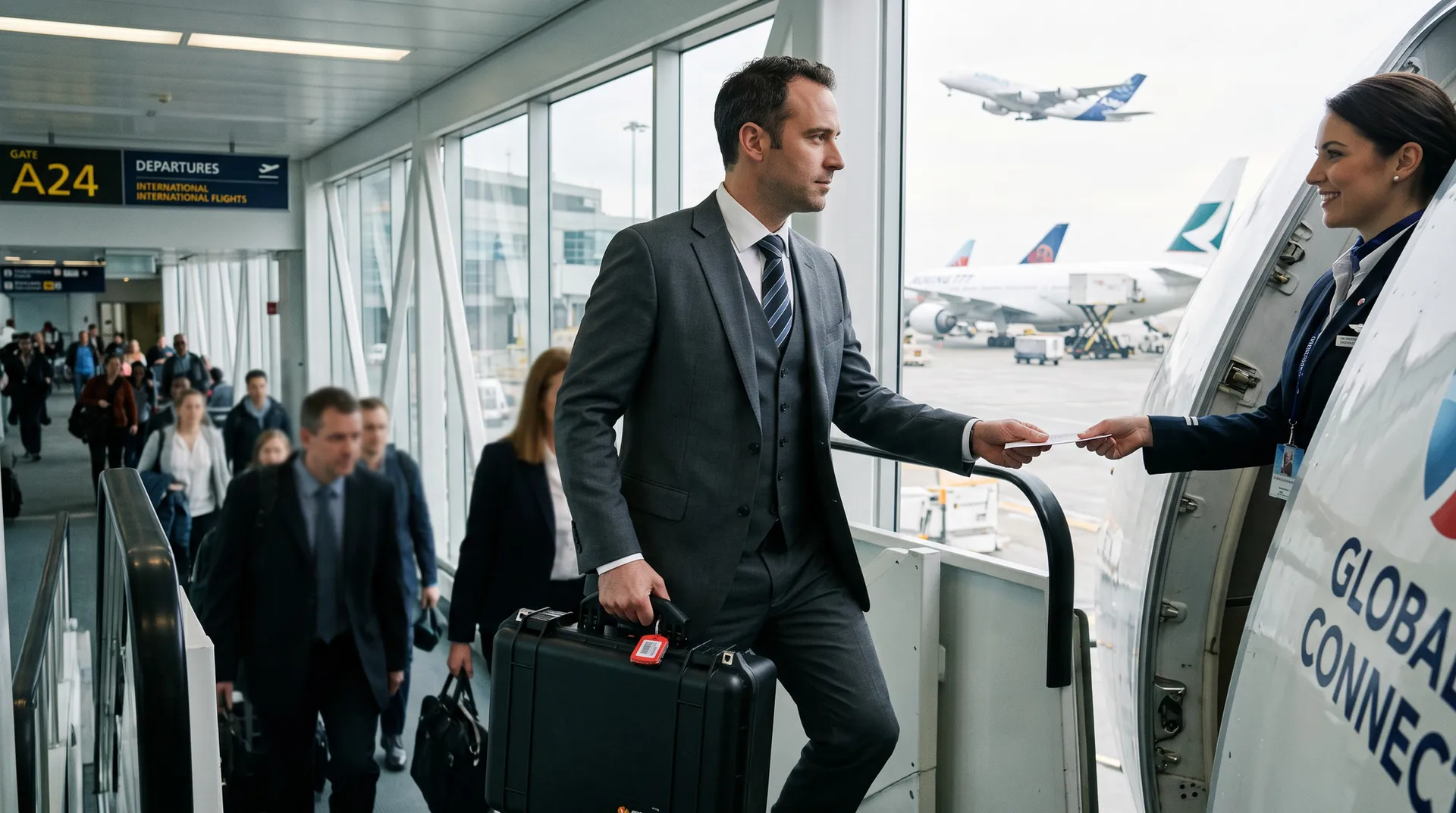
After payment, FlyTrix appoints a courier, selects suitable flights on regular passenger routes, and organizes the first and last mile. The courier accompanies the departure personally on board — as an ordinary passenger. Most shipments are scheduled to be delivered on the day of shipment or the next day, depending on the route and flight schedule.
The service is limited to documents with no commercial customs value. Goods and shipments with non-standard customs requirements remain within the perimeter of classic FlyTrix channels.
The company's founder and CEO Adrian Kezberg explained the logic behind the product:
"We deliberately designed DocumentJet around a narrowly defined type of departure that can be booked online with minimal effort. Shipments with commercial goods or more complex customs requirements will continue to be handled individually through standard FlyTrix channels."
The interface was created without professional logistical terminology and without mandatory account registration. Kezberg formulated the criterion simply: if a person knows how to book a flight or a hotel, he can handle DocumentJet. The platform operates in five languages — English, German, Spanish, French and Italian.
The price of an international shipment varies from $2,500 to $6,000 and depends on the distance, availability of flights and route. Kezberg emphasized the operational complexity of pricing:
"With an urgent shipment, you can't just take the ticket price and add margin. Dozens of operational dependencies must work simultaneously, from airport availability and connecting times to immigration requirements and the availability of a suitable courier."
The service is focused on exceptional situations, not on the mass flow. "DocumentJet will never become a mass service. It is designed for exceptional situations where time and predictability are more important than price," Kezberg said, adding that the product does not pretend to compete with conventional express parcel market operators.
Traditionally, OBC and hand-carry services have been used primarily in the aerospace, manufacturing, and healthcare industries. DocumentJet is designed for a wider audience, including companies that require urgent transfer of original documents between foreign counterparties without involving a freight forwarder and without the classic process of agreeing terms.
Related materials:
- Air freight from Hong Kong to Europe has risen in price by 8.8% over the year — how much does regular air delivery cost now for comparison
- Ethiopian Cargo has launched on the CargoAi platform: 30,000 freight forwarders have access to flights — how to book urgent air transportation online
- Air cargo transportation in BRICS: pros, cons and cost — when urgent air delivery justifies its price