Russian retail is entering a phase of reassessment of familiar sales tools. Massive discounts and promotions that have been stimulating demand for a long time are starting to work against the companies themselves. Against the background of inflation and expensive financing, buyers are changing their behavior and switching to a more economical consumption model.
A study by the B1 Group of Companies shows that 92% of consumers consider price to be a key factor when choosing products. This means that the market has finally entered the mode of fierce price competition. At the same time, the share of impulse purchases is decreasing — almost half of buyers admitted that they were less likely to make unplanned expenses.
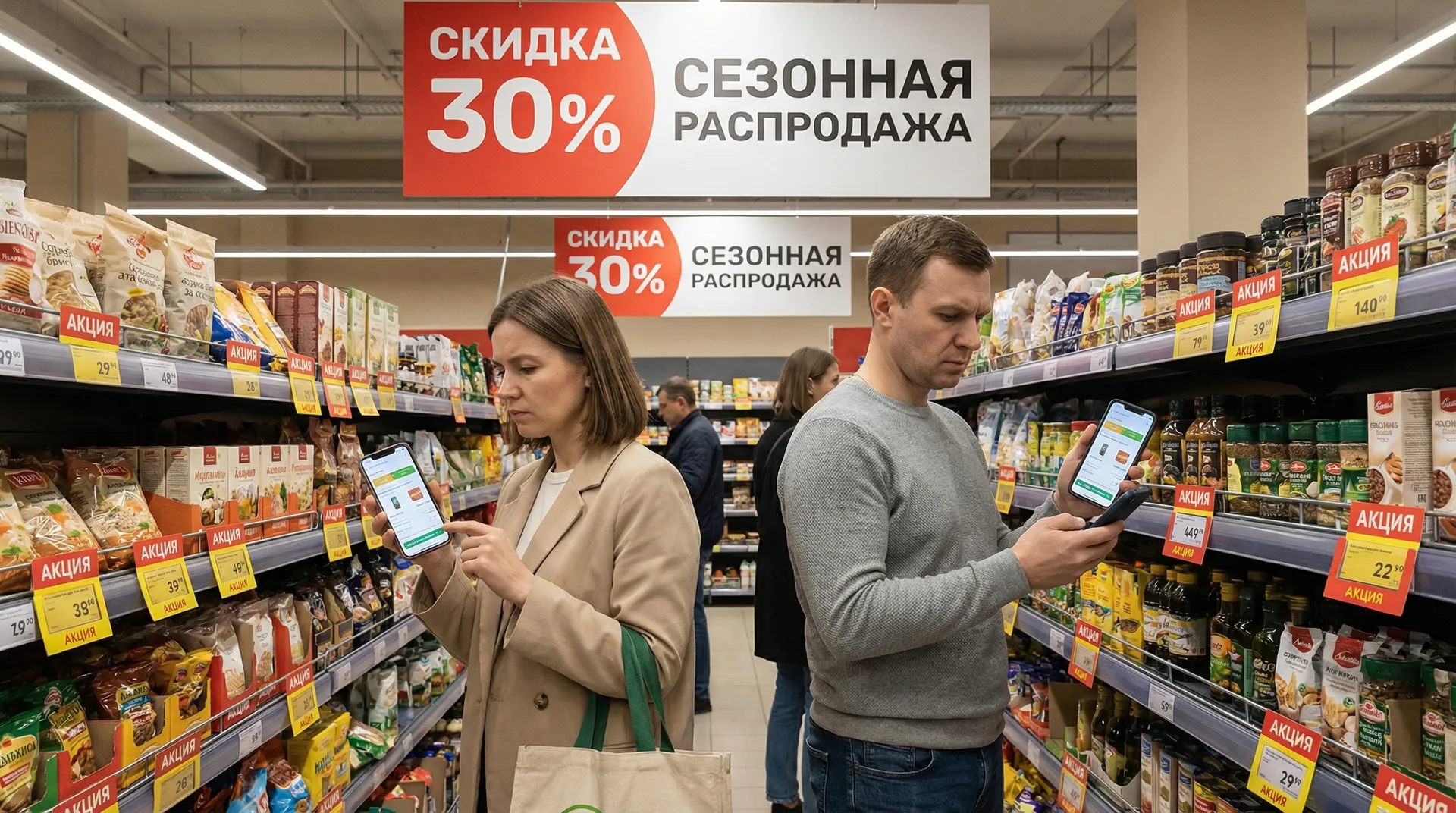
Another important shift is the growth in the share of stock purchases. Already 42% of buyers are purposefully looking for discounted products, which is changing the structure of demand. For retailers, this means that promotions cease to be an additional incentive tool and become a prerequisite for sales.
This is especially noticeable in the online channel. The growth of promotional purchases in e-commerce increases pressure on margins. Companies are forced to lower prices in order to retain customers, but at the same time incur additional costs for logistics, marketing and order servicing.
Experts point out that this model leads to the formation of a "promotional addiction." The buyer gets used to the discounts and postpones the purchase until the next promotion. As a result, retailers fall into a vicious circle: sales fall without discounts, and profits decrease with discounts.
In these circumstances, the market is starting to look for new approaches. Demand analytics, personalized offers, and the use of AI to manage prices and promotions are coming to the fore. Companies strive to more accurately predict customer behavior and reduce the share of ineffective discounts.
For retail, this means a change of model. Simply increasing the number of shares no longer works. The business has to move to a more complex demand management system, where each discount must be economically justified and integrated into the overall sales strategy.