South Africa tightened control: cargo with 671.5 kg of cannabis and 916 tires was detained at Oshoek
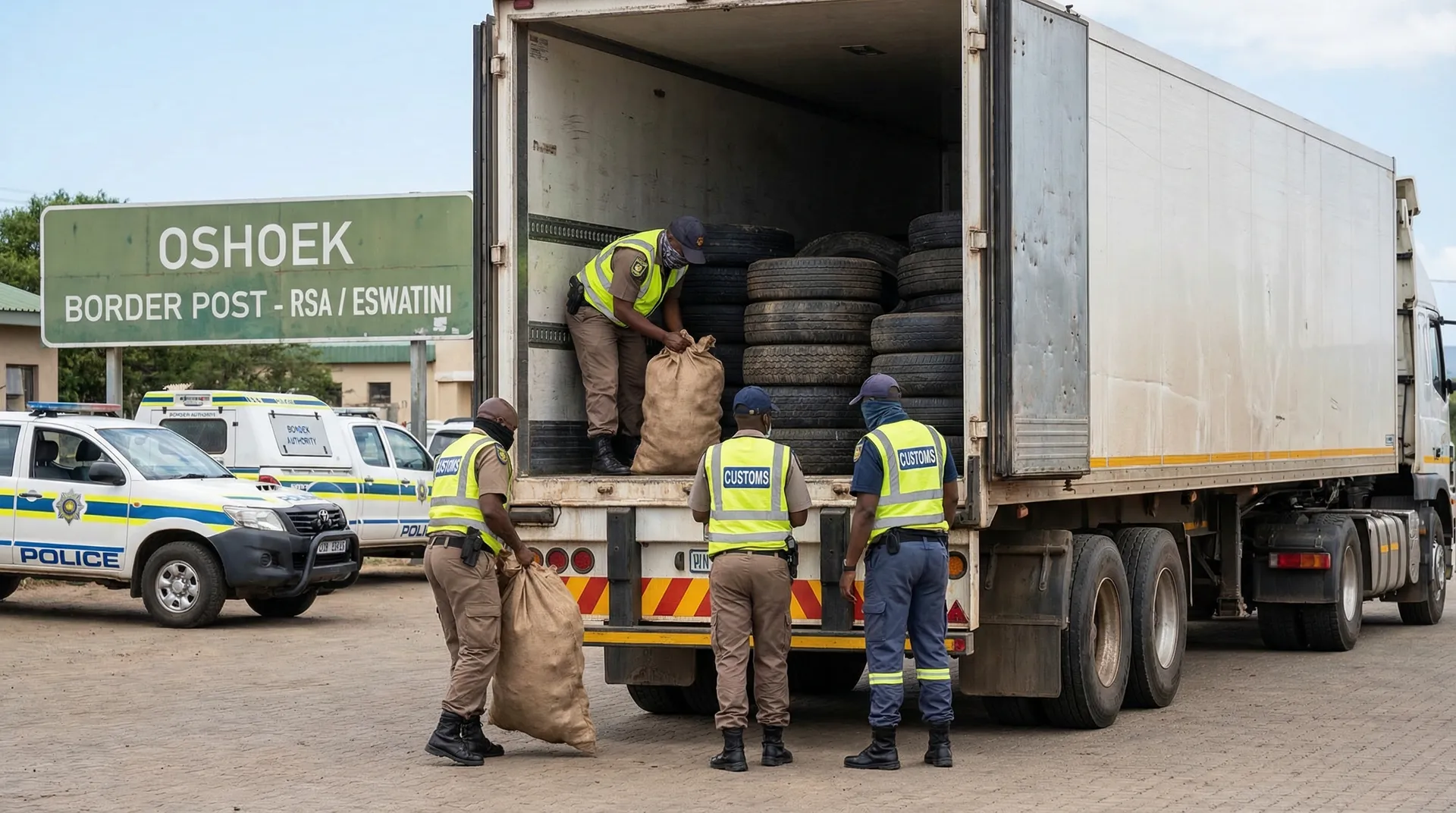
A joint operation by the Border Management Authority (BMA), the police and the South African Revenue Service (SARS) took place at the Oshoek border checkpoint in South Africa, as a result of which a large batch of prohibited and illegal goods was seized. Freight News reports that a truck traveling from Eswatini to South Africa was stopped around 20:00 during a search operation.
According to the BMA, during the inspection, 50 bags of cannabis were found in the trailer, the total weight was approximately 671.5 kg, the estimated "street value" was 2.8 million rand. There were 916 illegal tires in the same shipment. The truck driver has disappeared, and search operations have begun. The seized items were registered for evidence, SARS seized the truck itself, and a criminal case was opened.
For the transportation and foreign economic activity market, this story is important without criminal romance. It shows the priority of joint border checks and the increased coordination between the services. In such conditions, it becomes critical for legal carriers and cargo owners to keep documents, packing lists, proof of origin and correct labeling of cargo items in order. Any inaccuracy increases the screening time, and downtime at the border quickly turns into money, especially during transit and with fixed delivery windows.