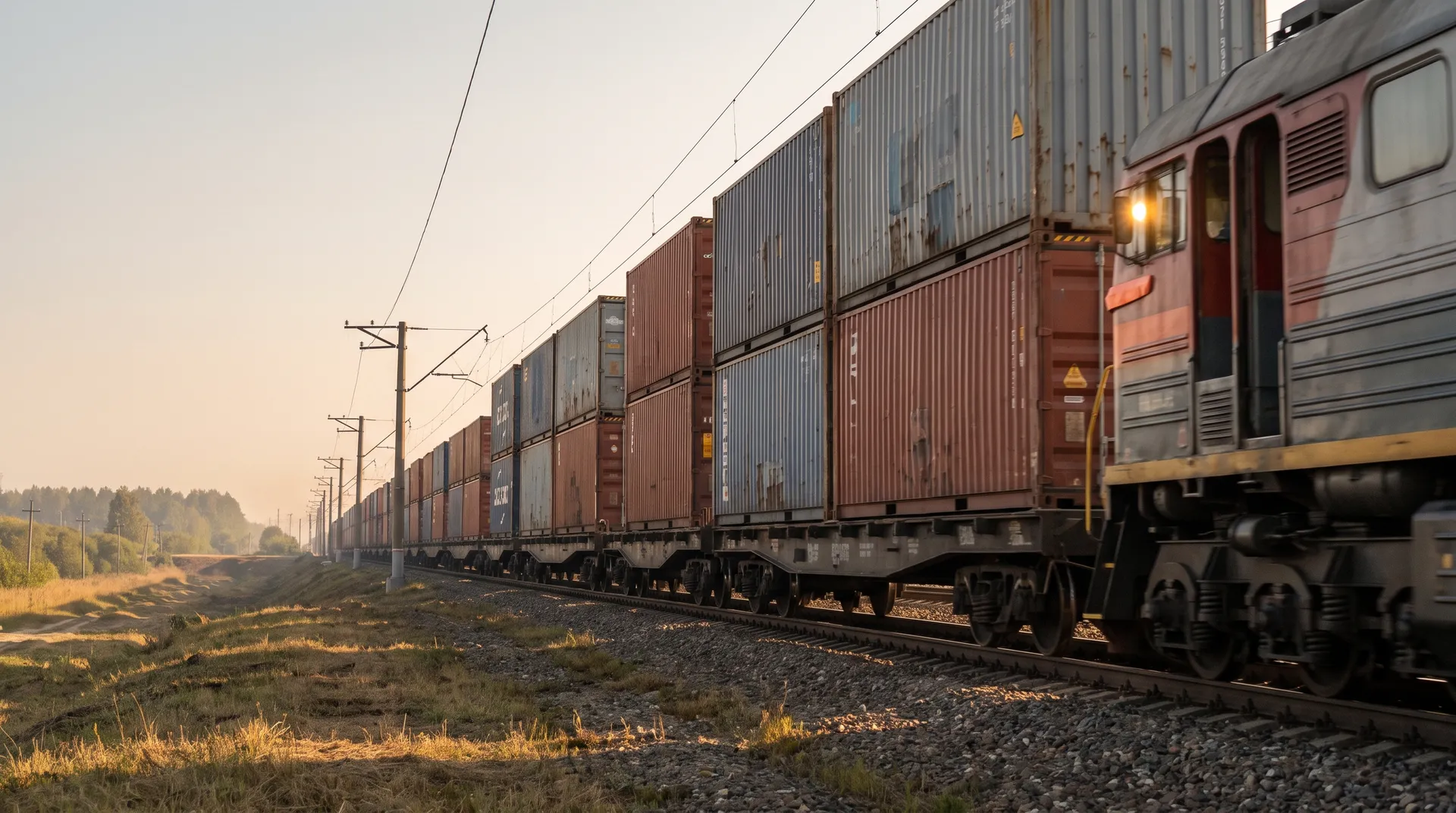
Russian Railways freight tariffs will be indexed on October 1, 2026 instead of January 1, 2027. The rates will increase by 8.5%, and the relevant resolution has been published on the legal information portal. The proposal was prepared by the Federal Antimonopoly Service at the request of the carrier.
Moving it a quarter earlier changes the calculation for everyone who ships by rail in the fourth quarter. Contracts concluded under the January indexation now cover three months at new rates — and this is not a one-time increase, but a shift in the entire tariff curve for future periods.
The increase falls on the already accumulated layer of allowances. Since March 1, 2026, transport security fees have increased by 1%. Previously, a 10% surcharge was introduced for the empty mileage of universal wagons and 5% for the transportation of containers. For the container operator, this means that the October base rate consists of several increases in a row.
The logic of the decision is read through the carrier's finances. In 2025, revenues from freight transportation and access to infrastructure amounted to 2.6 trillion rubles, an increase of 8% year-on-year, while loading decreased by 5.6% to 1.116 billion tons. The investment program is shrinking: 890.9 billion rubles in 2025 against 1.5 trillion a year earlier, 713.6 billion were approved for 2026. The indexation from last year is calculated according to the composite price pressure index, which takes into account wages, materials, fuel, electricity, depreciation and the key rate.
The October date coincides with other changes: the law on the platform economy comes into force on October 1, and there are days left to fix the error in the DPP.
What a business should do. Recalculate the transport component for contracts with the railway arm for the fourth quarter: The price fixed at the old rate will no longer cover it by October. Shipments that can be postponed to September should be postponed. In contracts with a long horizon, it makes sense to make a reservation about the revision of the cost of transportation when changing regulated tariffs — the January indexation of 2027 has not gone away, the only question is its size.
Similar materials on the website
- Logistics has risen in price by 20% due to the fuel crisis, the second source of pressure on the transport component this fall.
- Since August 1, the export of gasoline, diesel and marine fuel has been prohibited — a fuel frame in which carriers calculate rates until the end of winter.
- Fesco has reduced container clearance in Vladivostok — where else can the container operator recoup the cost