The Ministry of Industry and Trade announced the timing of labeling of semi—finished products and freezing - starting in September
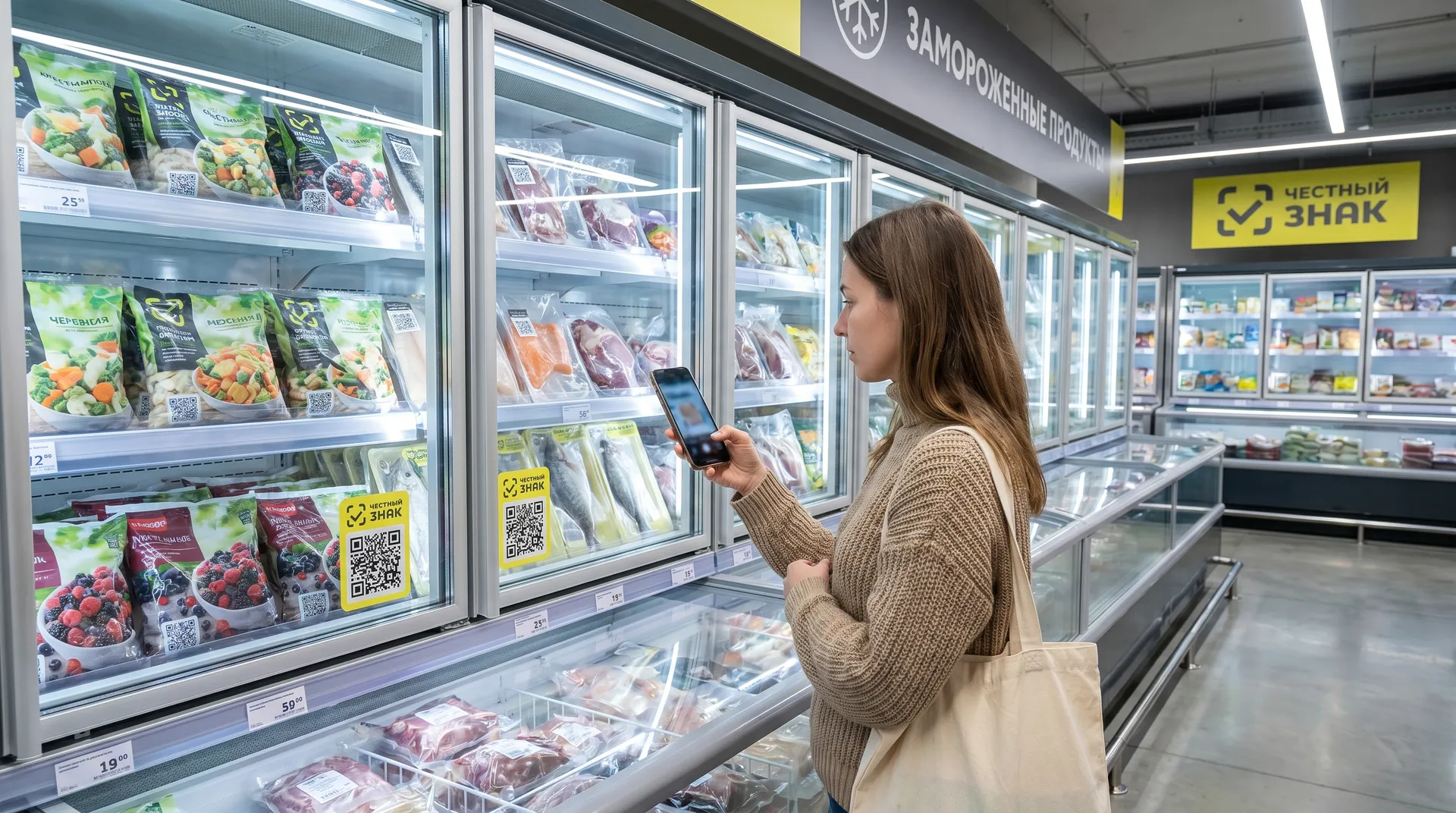
The list of products under mandatory labeling continues to grow. After tea, coffee, building materials and electronics, which were included in the system in 2026, it was the turn of frozen and semi—finished products, categories through which Russia receives a significant flow of imports from China, India, Southeast Asia and Latin America.
The Ministry of Industry and Trade has published draft amendments to Government Decree No. 1682 dated November 30, 2024. The document describes in detail the timing and sequence of connecting product groups.
Our expert Anna Alikberova talks in detail about the "Honest Sign" marking in an article here.
- Starting from September 1, 2026, all market participants — manufacturers, importers, distributors, and retailers — are required to register in the Honest Sign system. This is a technical stage: it is physically impossible to work with labeled products without registration in the system.
- The first wave of mandatory labeling will start on December 1, 2026. Frozen vegetables, fruits, berries and mushrooms fall under it. This is already a wide category of imports — cranberries and berry mixes from Belarus, vegetable mixes from Poland through intermediaries, exotic fruits from Southeast Asia.
- Starting from February 1, 2027, fish products and semi-finished products will be added. For importers of fish and seafood from Norway, Chile, Vietnam, and India, this is a complete reformatting of the document flow.
- From April 1, 2027, meat, poultry, and ready—made frozen meals will be available. These include dumplings, burgers, nuggets, and ready—made dinners - categories in which imports from Belarus and Kazakhstan are high, plus a growing flow from China and Brazil.
Full accounting of product turnover is launched from 2028, piece—by-piece - from 2030. This means that the government will see every package of frozen dumplings from the moment of production or importation to the moment of sale at a retail outlet.
For food importers from the BRICS countries and other areas, this requires direct action now.
- The first is to review contracts with foreign suppliers: to include in them the obligation to apply "Honest Mark" codes in production, or to organize labeling in Russian warehouses before they are put into circulation.
- The second is to calculate additional operational costs for labeling: printing, equipment, software for integration with the system.
- The third is to lay down the risks of downtime at the start: the first deliveries after the dates of entry into force of the standards will inevitably encounter technical failures of the system.
Gray imports of frozen products and semi-finished products will practically close after 2027. Those who work in these categories without full documentation must either rebuild their processes before the deadline or leave the market.