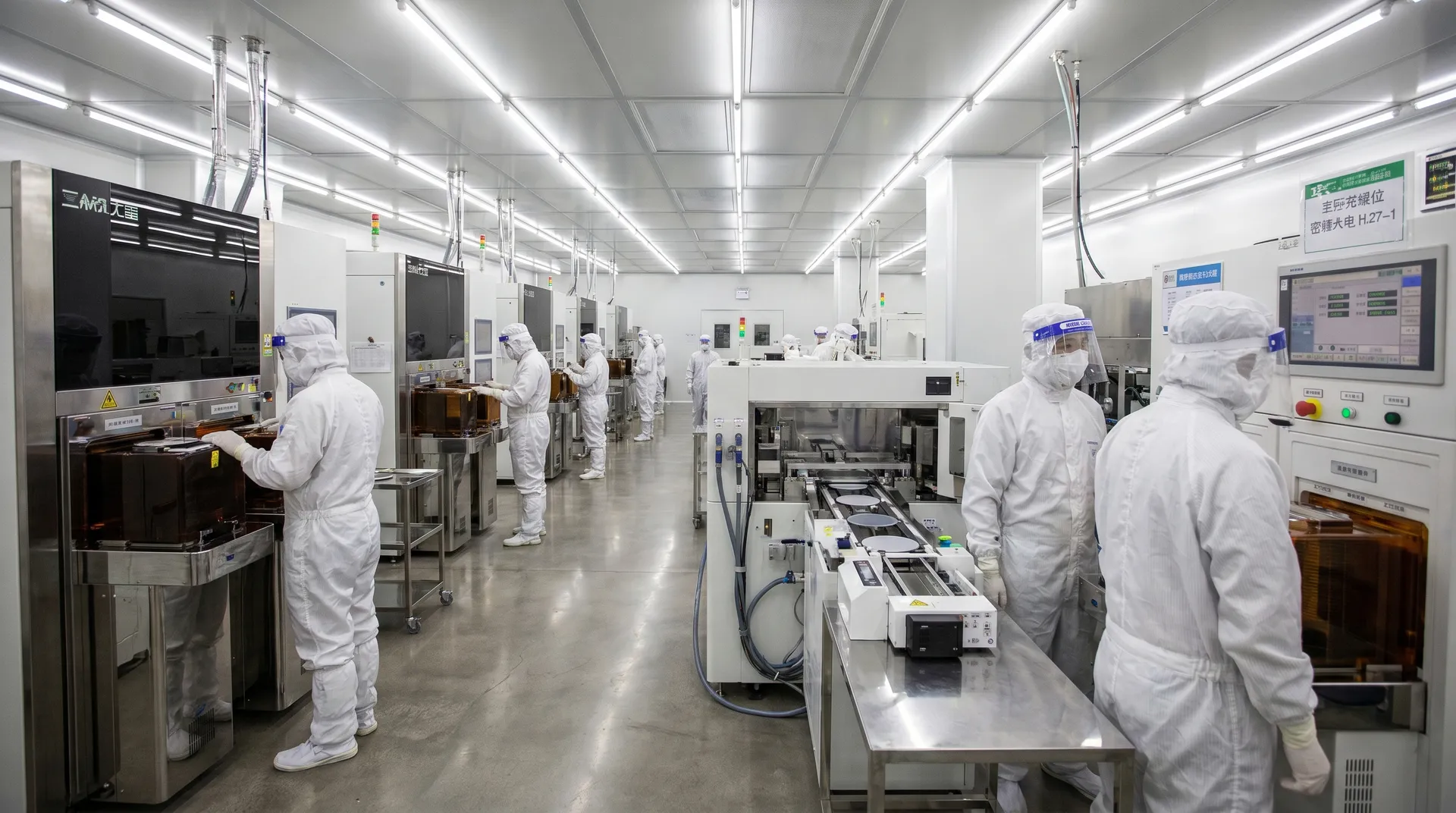
Orbital computing sounds like a technology of the distant future, but there is a specific economic logic behind this statement that is important for electronics importers right now: accelerating the localization of semiconductor production in China.
What is orbital computing and why is it important?
The principle: instead of transmitting huge amounts of data from satellites to ground stations for processing, processing takes place directly in orbit — on specialized computing modules. This requires the development of energy-efficient, radiation—resistant processors, a category of chips that has historically been a monopoly of Western manufacturers (Radiation-hardened chips from companies such as BAE Systems, Honeywell).
The inclusion of this area in the five—year plan means that China is investing in the development of specialized chips of its own production for critical applications such as space, defense, and telecommunications infrastructure.
Connection with the semiconductor localization program
In parallel with orbital computing, China is expanding its overall import substitution program in semiconductors. The goal is independence from Western components by 2028. This is not a new goal — China has announced it before — but the new five-year plan specifies deadlines and directions.
To understand the scale: China already produces chips using the 28-40 nm process technology for industrial applications (through SMIC and other manufacturers). The 2028 goal is to expand localization to a wider range of applications, including components for consumer electronics, the automotive industry, and telecommunications.
What does this mean for Russian importers
Since May 27, laptops, servers, and components from major Western brands (Acer, ASUS, HP, IBM, Intel, Kingston, Samsung, and Cisco) have been excluded from parallel imports. For the Russian electronics market, this means increasing dependence on Chinese alternatives — Lenovo, Huawei, Xiaomi and others.
China's localization program by 2028 will directly expand the range of available alternatives. Chips that China is forced to import from Taiwan or Korea today can be produced domestically by 2028, which reduces dependence on China itself and indirectly increases the availability of such components to Russian importers through Chinese suppliers.
The practical horizon
2026-2027: The current range of Chinese analogues (28-40 nm processors) remains basic for industrial electronics, automotive, and household appliances. 2028 and beyond: expected expansion of the range towards more advanced applications.
For companies planning long—term supply chains of electronic components: tracking the development of the Chinese localization program is a direct indicator of the future availability and price of components in 2-3 years.