The Ministry of Industry and Trade wants 22% VAT on foreign parcels from 2027 — the Ministry of Finance is against a sharp jump
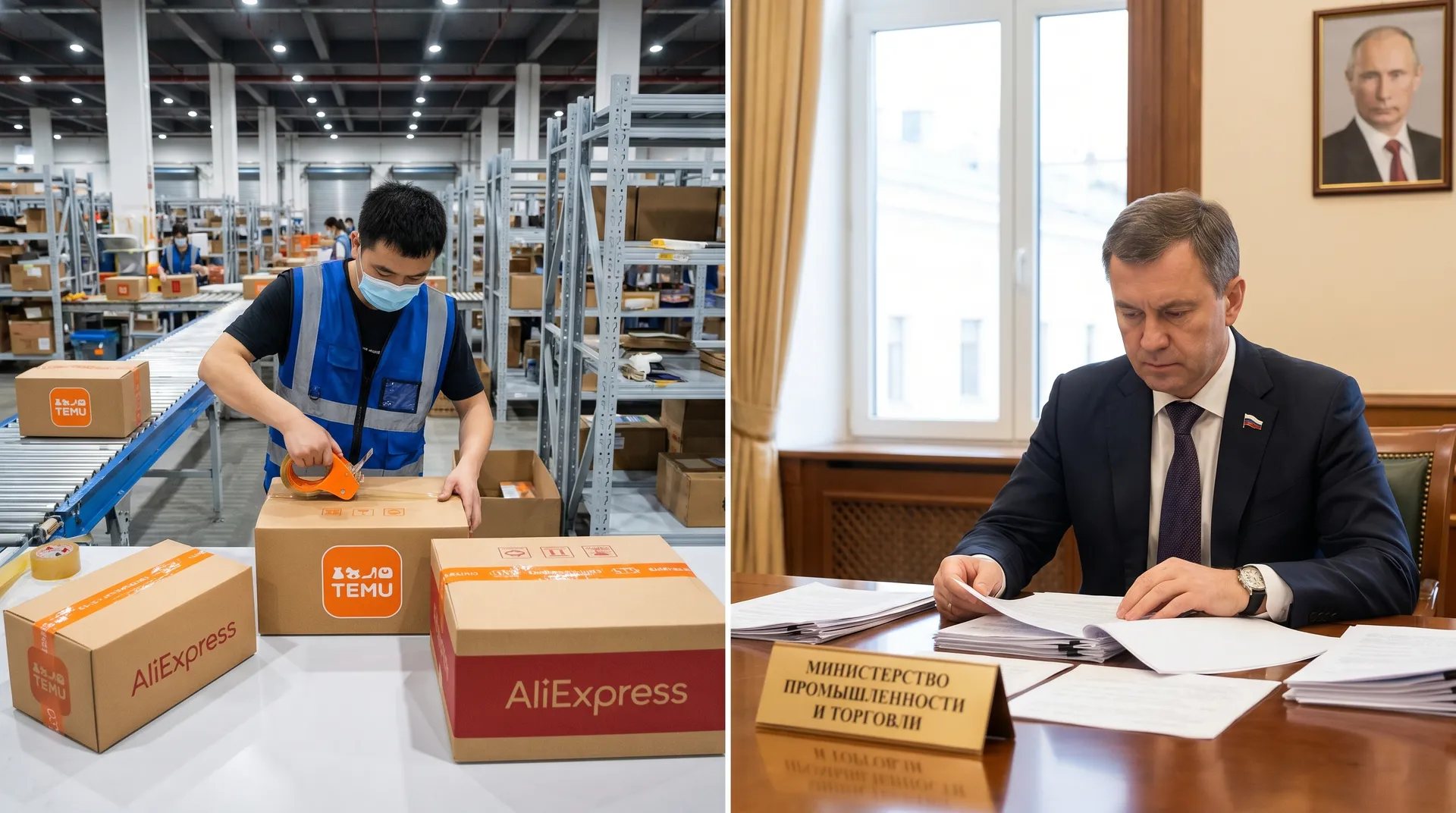
The denouement of the multi-year dispute over the taxation of cross-border trade is approaching. The two agencies have taken opposing positions — and both are public.
The Russian Ministry of Industry and Trade supports a sharp increase in the tax — immediately to 22% from the new year. Representatives of offline retail insisted on the accelerated introduction of VAT for e-commerce. The Russian Union of Leather and Shoe Workers has made a similar request to the government. ACORT, the Association of Omnichannel Trading Companies, also supported the 22% rate from 2027 in a letter to Prime Minister Mishustin.
The Ministry of Finance has taken an intermediate position: smooth growth, according to the agency, will allow businesses to adapt, but by the end of the transition period, the difference in the tax burden between sales channels will be eliminated.
The positions are clear. The Ministry of Industry and Trade protects Russian manufacturers and offline retailers - for them, every month without VAT on foreign goods means a competitive loss. Marketplaces and their sellers are asking for time: A quick introduction breaks down well-established work patterns without time to rebuild.
What does this mean in practice for the foreign economic activity business, regardless of which scenario wins.
- First, for the first time, foreign sellers trading to Russia through a cross—border will be required to register with the Russian tax system and pay VAT on each parcel. Some small operators will leave the market.
- Secondly— logistics is becoming more complicated. Logistics and administration will become more complicated, and you will need to register with the Russian tax system, as electronic platforms currently do. Many global marketplaces may simply restrict sales in Russia.
- Third, big business is reorienting itself. Major players are refocusing on supplies through Russian importers and wholesale shipments. This will definitely help large marketplaces.: They will sell mainly Russian goods or imports that have already been imported in large quantities.
- Fourth, there are losers among their own. These measures will not help manufacturers who import components themselves or produce products that have no Russian analogues, such as special electronics, medical equipment, or original cosmetics.
For importers working through marketplaces, there is only one practical conclusion: we are already starting to recalculate the unit economy at a rate of 7% starting in 2027. If the Ministry of Industry and Trade sells 22% immediately, the financial model should be ready for the worst—case scenario. Working in the gray becomes more expensive and more risky in any case.