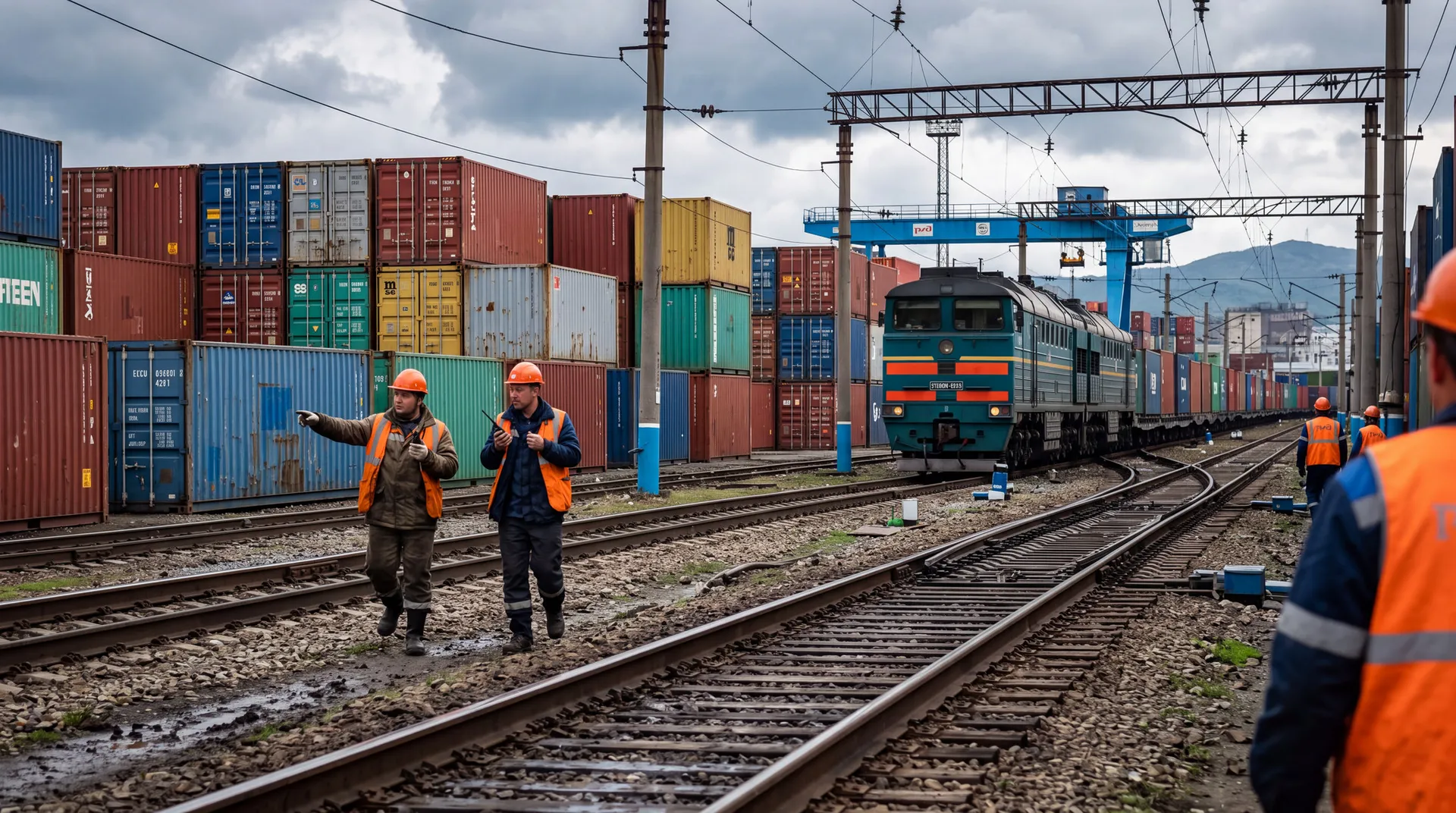
The difference between September and December rates for a 40'HC container in 2024–2025 was 50–80 thousand roubles, and this dynamic serves as a benchmark for the end-of-2026 forecast. There are no grounds for a significant drop in rates before the peak: in recent months, tariffs on multimodal routes via the Far East have barely changed due to the lack of noticeable growth in cargo flows.
November and December are traditionally a period of increased demand on the China route. Importers seek to have goods in warehouses before the New Year holidays or to bring them into Russia before the end of the calendar year. Additional interest in the Far East route is supported by the short sea leg, which allows cargo to be delivered to the country relatively quickly.
At the same time, infrastructure constraints on the railway persist: a shortage of container flatcars, longer waiting times for loading containers and local difficulties with transshipment. If the seasonal growth in cargo flows coincides with these bottlenecks, importers will face not only more expensive delivery but also less predictable transit times.
Wellgo recommends that shippers who need to receive goods before the end of the year book space in advance and build in a time buffer. For urgent consignments, it makes sense to consider road delivery or express trains from China.
Related news:
- Two thirds of Far East — Europe container capacity returned to Suez — how Far East — Europe container routes are changing
- Cargo turnover of Far Eastern ports grew by 10.6% in Q1 2026 — how cargo turnover of Far Eastern ports is growing
- Container rate Vladivostok — Moscow rose to 354 thousand roubles — the cost of a container from Vladivostok to Moscow
- The September issue of the container shipping study is out — fresh analytics on container shipping
- How to ship cargo from China now: an honest breakdown of price and speed — comparison of routes from China by price and transit time