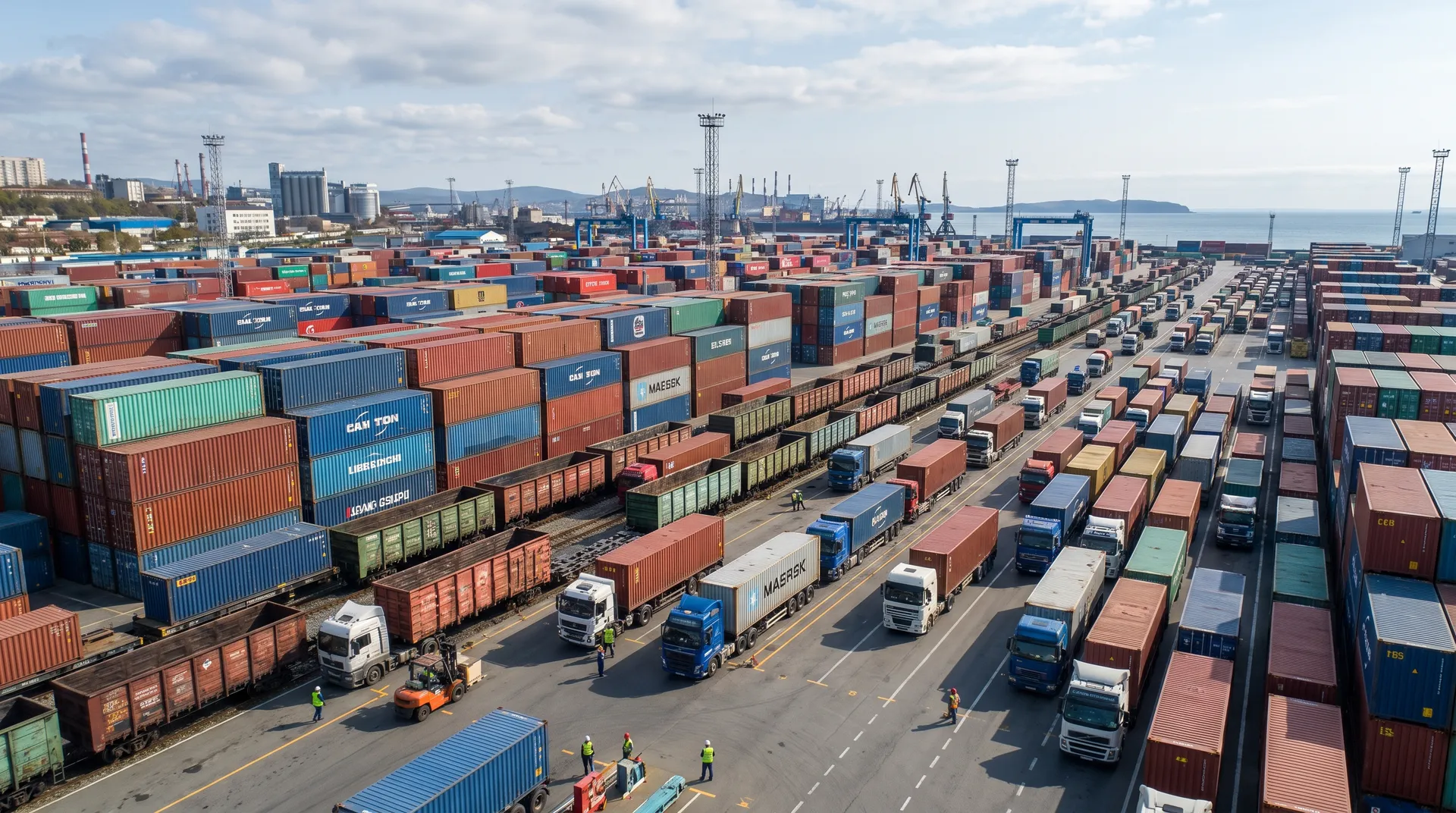
April 2026 was one of the worst months for imports from China to Russia since 2022. The uncertainty surrounding the Hormuz crisis, rising rates on all routes through the Persian Gulf and the UAE, plus the weakening of the ruble against the yuan, all together forced a significant part of importers to freeze purchases and wait for the situation to clarify.
The situation became clearer in May–June: the US–Iran truce, the partial opening of Hormuz, and the stabilization of freight rates. And around the same time, everyone who was waiting started booking containers at the same time.
What is overbooking in container shipping?
Container lines operate with a fixed carrying capacity: a certain number of slots on each train or in each convoy. Under normal demand, these slots are filled evenly. With a simultaneous peak in bookings from several large shippers, a situation arises where the accepted shipments are greater than the actual carrying capacity.
Consequences for a particular shipper: the confirmed shipping date shifts to the right, and you have to wait for the next window. With planned seasonal sales, a 5-10—day shift may mean a delay in peak sales.
The specific situation on the routes
Through Zabaikalsk (the main land border crossing for goods from China): The download has grown to its maximum since the beginning of 2026. The waiting time for slot confirmation is from 1 to 3 weeks. The delivery time from shipment at the supplier's warehouse to arrival in Moscow or Novosibirsk increased by about 5-10 days relative to normal.
Through Vladivostok (sea route): the picture is similar, especially for goods from the ports of Shanghai, Ningbo, Qingdao.
What to do right now
The first and most important thing is to book containers and confirm slots at least 3 weeks in advance, not 1. With the current overbooking, the standard weekly planning horizon is not enough.
The second step is to notify buyers and customers of potential delivery delays. With planned deadlines that were calculated for normal logistics, a delay of 5-10 days may violate contractual obligations.
The third step is to consider air delivery for critical positions with tight deadlines. For expensive compact goods, the overpayment for airfare may be less than the loss due to delivery failure.