The Hunan provincial government has published a three-year action plan for trade with Africa. The goal is 80 billion yuan, about 11.86 billion dollars, by 2028. In 2025, the province's trade with African countries amounted to 58 billion yuan; according to this indicator, Hunan is the first among the central and western provinces of China for the seventh year in a row.
The reason for the breakthrough is a national measure that came into force on May 1. China has extended the zero duty regime to 53 African countries that maintain diplomatic relations with it. For exporters and importers, this is a restructuring of the tariff landscape of an entire continent.
Statistics confirm the effect. In the first seven months of 2026, China's total trade turnover with Africa reached 1.66 trillion yuan, an increase of 18.9% year—on-year, almost on a par with ASEAN, where growth was 20%. Exports to Africa increased by 20.4%, while imports increased by 16.4%.
Hunan's plan is based around six industries: mining, automobiles and components, construction machinery, medical products, modern agriculture, and green energy. The focus is on 12 key African countries, about 10 landmark industrial cooperation projects and one or two pilots based on the "two countries— two parks" model.
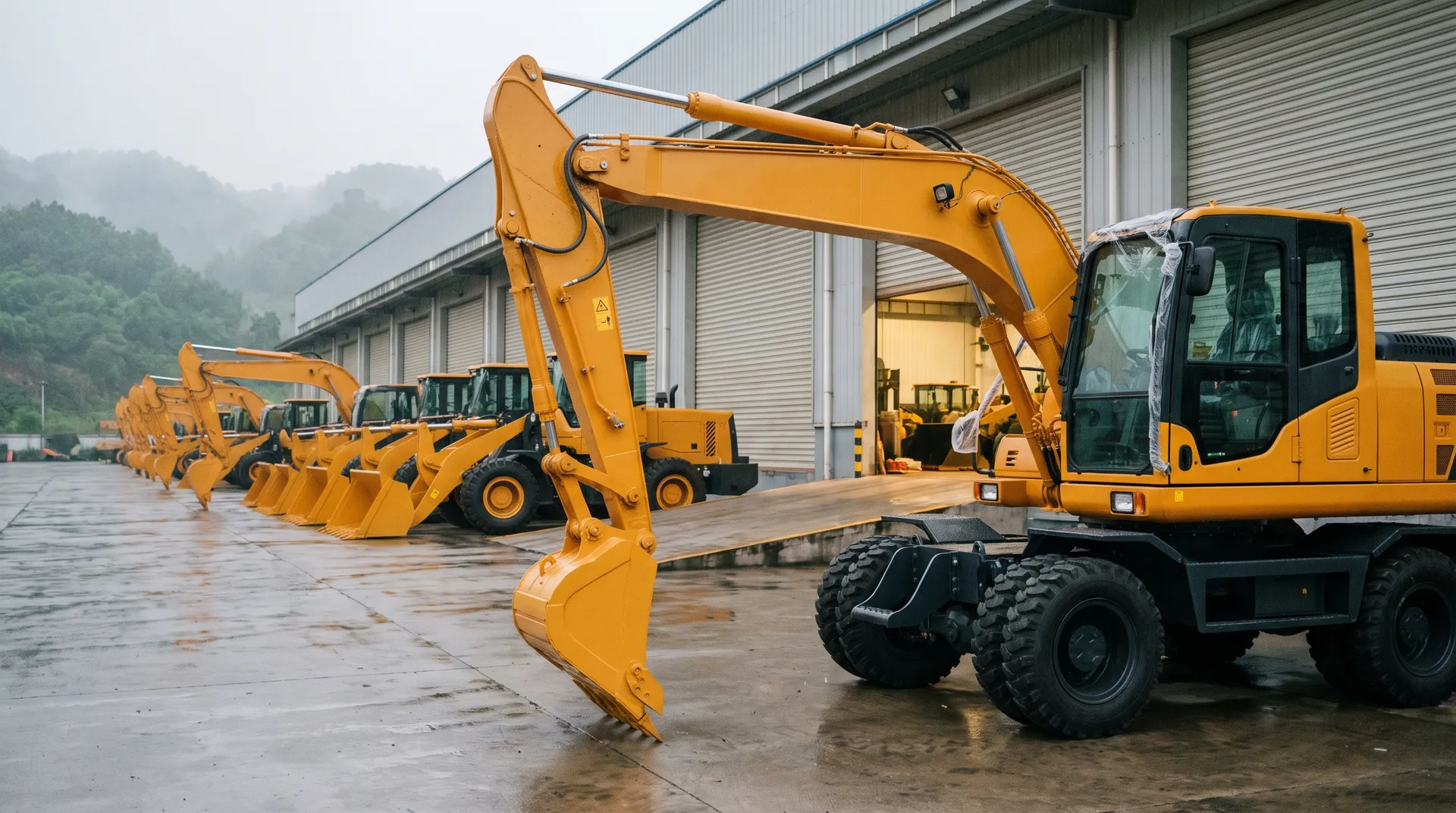
The specifics of the directions are described in detail. In mining, infrastructure development for projects in Africa, increased shipments of raw materials to China, export of mining equipment, testing laboratories and an investment fund for exploration. In the automotive industry, there are exports of car kits, access to taxi markets, and expansion of used car exports. In construction machinery, supplies for Chinese infrastructure and mining projects, and exports of refurbished machinery.
"The province's leading construction machinery sector can largely meet the needs of African countries in modernizing commodity trade and stimulating local industrialization," said Song Wei, a professor at Beijing University of Foreign Languages.
There are two practical consequences for Russian business. First, Chinese construction and mining equipment, which is massively purchased in the Russian Federation, receives a powerful competing sales channel — this affects queues, deadlines and the negotiating position. Secondly, the zeroing of duties for 53 countries makes Africa a more attractive destination for re-export and production schemes with Chinese participation.
What a business should do. Importers of construction and mining equipment from China should put longer deadlines into negotiations: manufacturers receive additional demand. Companies working with African markets should check whether the counterparty country is among the 53 countries with zero tariffs.: this changes the calculation of schemes with Chinese raw materials and components.
Similar materials on the website
- China has opened a center for companies to enter the BRICS markets in Xiamen — the same export strategy, a different tool
- Russian Expert has opened an office in China for certification — work with Chinese manufacturers from the Russian importer