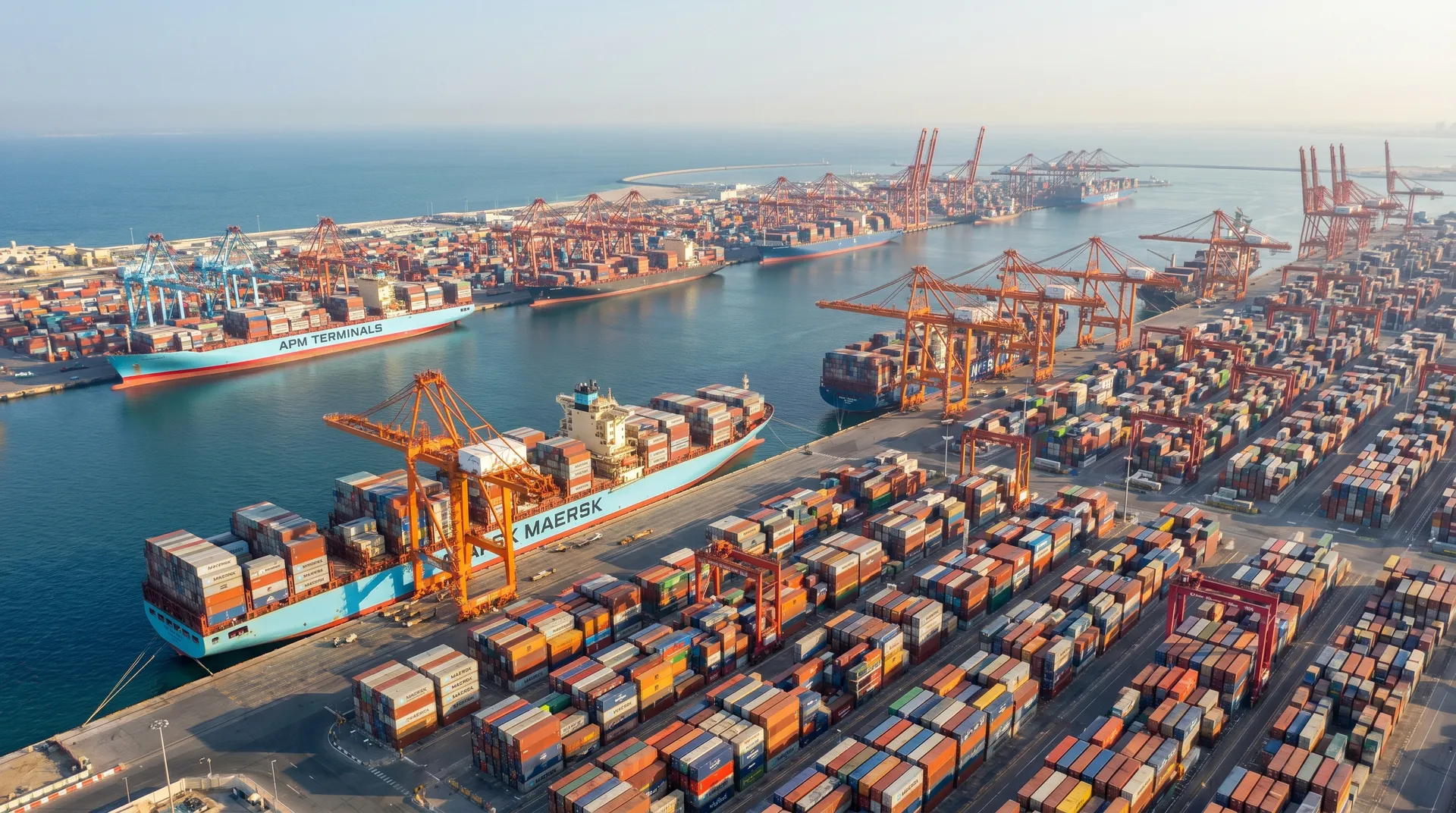
Until February 2026, the standard Jebel Ali-Novorossiysk freight rate was in the range of $3,500–4,000 per 20-foot container. When the American blockade of Hormuz closed the direct route from the Persian Gulf, shipping lines began to circle the strait through alternative ports.
There are two main detours: through the port of Salalah in Oman and through Jeddah in Saudi Arabia. Both add 1,500 to 2,500 nautical miles to the route and additional container transshipment, which raises the cost.
What makes up $10,360
The base freight on the bypass route is about $6,500—7,000 per TEU. War Risk Premium is added to it: insurers charge a surcharge for passing through potential conflict zones. Additional port handling in Oman or Saudi Arabia adds $500-800. Total— about $10,360 at the end of May and beginning of June.
On June 11, Iran again announced the closure of Hormuz in response to the US overnight strikes. This means that there will be no rate cuts in the coming days. On the contrary, a new growth of War Risk Premium is possible.
How does this affect specific categories
The 2.7-fold increase affects almost all goods that are transported from Asia via Dubai to Russia: electronics, clothing, household appliances, and food. The UAE is a key transit hub for the re—export of goods from China, India, Korea and other countries to Russia.
For companies that have built a supply chain through Dubai, an increase in the cost of delivery from ~$4,000 to ~$10,360 means that with a shipment of $100,000, the logistics component increased from about 4% to 10% of the cost of the cargo.
What businesses are doing right now
Three possible responses to the situation. The first one is to refocus on direct supplies from China via Vladivostok or Zabaikalsk, where rates are stable and do not depend on Hormuz. The second option is to use air delivery for expensive compact goods, where rising freight costs are critical to margins. The third option is to set the current rates as the base rates until the situation normalizes and to review the pricing of final goods.
For companies with long—term contracts at fixed prices, it is necessary to review the terms with suppliers. The growth of the logistics component by 2.7 times in 4 months is a force majeure change in market conditions.