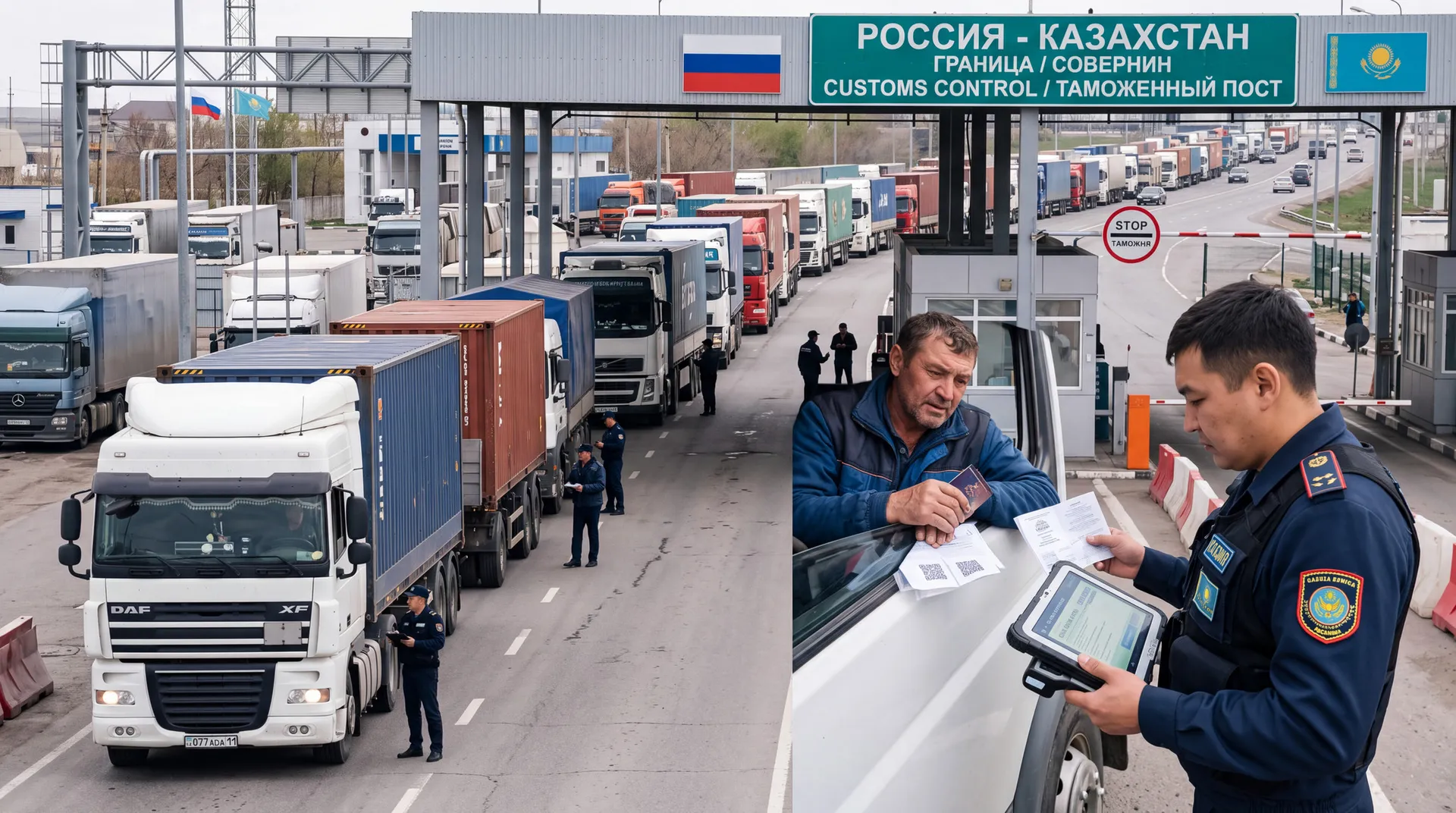
Since June 1, SPOT has been operating in combat mode. Three weeks of practice have shown that those who are prepared can pass in a few minutes. Those who don't are unwrapped. Now the system is being expanded to bulk shipments, and companies have exactly three weeks to rebuild.
What is bulk cargo in the context of SPOT
A combined cargo is when goods from different shippers or different shipments from the same shipper are traveling in one car. A typical situation is when a logistics company forms a truck from 10-15 individual orders from different customers from Kazakhstan or Belarus.
Until July 1, the DPP was issued for the entire car — the transport company or forwarder submitted one document. From July 1, each part of the combined supply is a separate ADD—on.
"Starting from July 1, 2026, you will have to establish very tight communication with the transport company, since it is impossible to arrange an additional payment without a specific truck number and arrival date," Kontur experts explained.Extern.
Why is it harder than it looks?
With a full truck, the logic is simple: there is a car, there is a date — you submit an additional payment in 2 days. When collecting cargo, the shipper becomes dependent on the transport company: until it forms a batch and assigns a specific car, it is impossible to submit an additional payment.
The problem is that transport companies often change the car for a combined load right up to the last moment — they redistribute the load between trucks. From July 1, this flexibility will become a source of disruption: the car has changed, and a new DOPPLER is needed.
Three steps until July 1st
The first is to contact transport companies operating on combined routes from the EAEU and clarify their willingness to provide the vehicle number and the date of importation at least 2 days before the border.
The second option is to add an obligation to provide vehicle details within a specified period to contracts with carriers. An oral agreement is not enough — a written one is needed.
The third is to review the schemes with regular small-scale supplies from the EAEU. If you import in small batches on a weekly basis, it may be more profitable to switch to less frequent but larger shipments in order to reduce the administrative burden on the DPP.
Who is particularly affected by this
Marketplace sellers who buy small shipments from Kazakhstani or Belarusian manufacturers through bulk shipments. Companies working with Armenian suppliers through bulk shipments (despite Rosselkhoznadzor bans on products, industrial goods from Armenia are not prohibited). Logistics operators providing combined routes from the EAEU: they will have to restructure their internal processes.