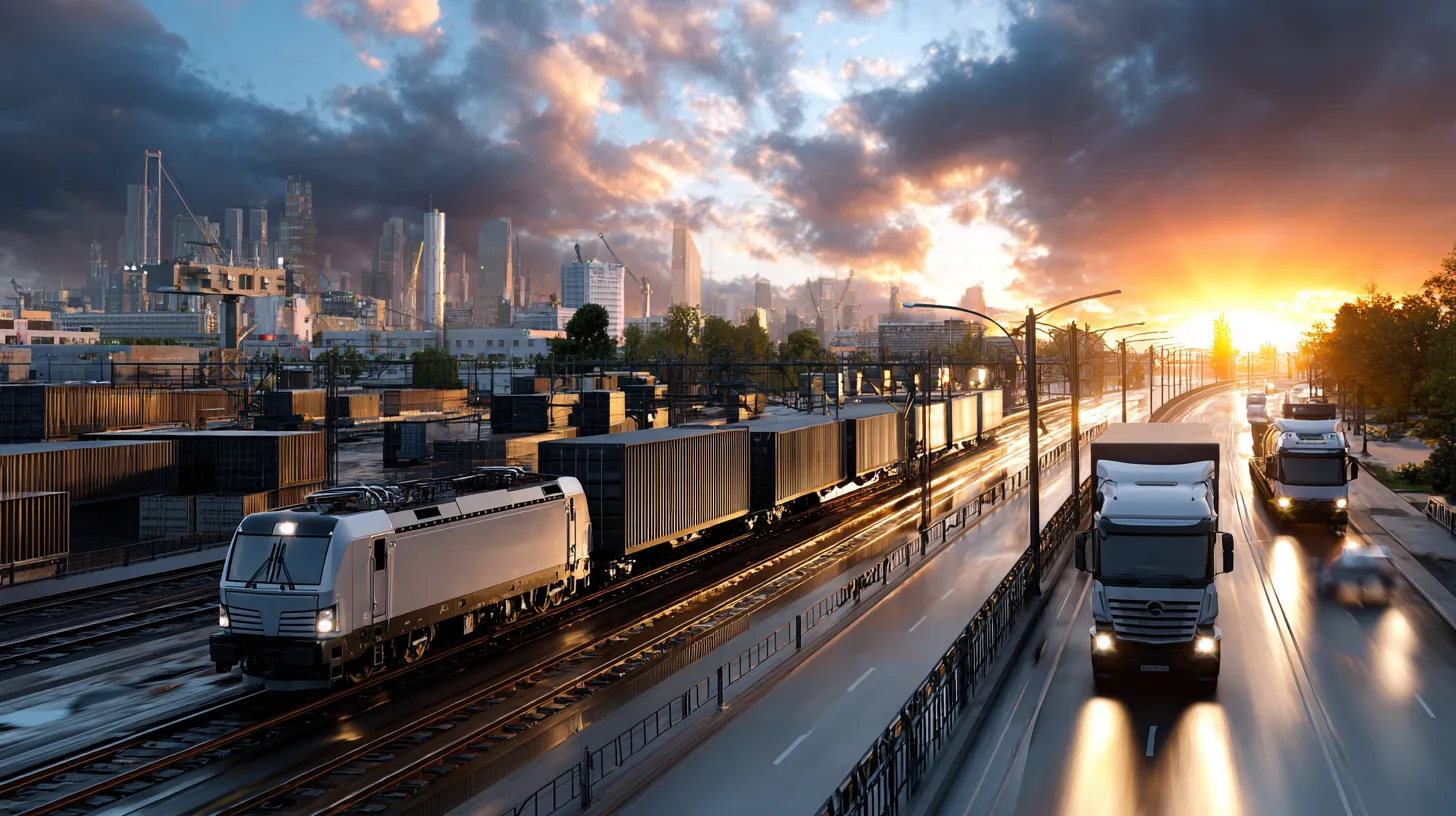
After the publication by Rosstat of the cargo transportation results for 2024, it is possible to finally draw a line in the long-standing dispute between supporters of rail and road transport. The figures showed that despite the rapid growth of trucking in recent years, the railway industry remains more stable and productive.
Russian railways managed not only to recover from the 2008 crisis, but also to show record results by 2011, when the volume of traffic reached 1.381 billion tons, exceeding the level of 2007 (1.344 billion tons). In subsequent years, up to the 2020s, volumes remained consistently high - at the level of 1.3–1.4 billion tons annually. Even in 2024, against the background of economic fluctuations, the indicator decreased only slightly — to about 1.3 billion tons, which confirms the stability of the Russian Railways system.
By contrast, road transport took a long time to recover from the crisis. After the peak of 2008, when trucking reached 6.893 billion tons, the industry has been "sagging" for a long time. For more than a decade, volumes remained below the level of 2000, at about 5.9 billion tons. It was only by 2022 that a noticeable recovery began, but the records of 2008 have not been updated. According to updated data from Rosstat, in 2024, vehicles transported 6.776 billion tons of cargo, falling short of the 7 billion mark.
Thus, in 2024, railways will once again retain leadership in terms of dynamics and sustainability. They show stable performance despite the crises and changes in the structure of the economy. Trucking, on the contrary, shows potential for growth, but so far remains dependent on infrastructural constraints and fleet maintenance costs.
Nevertheless, experts note that the future of the transport market lies in the integration of both types of transportation. Rail transport will remain the base for mainline traffic, while motor transport will be the main link of the "last mile". With proper coordination of the two systems, Russia can not only surpass previous records, but also build a stable multimodal logistics network capable of coping with the growing volumes of trade and industry.