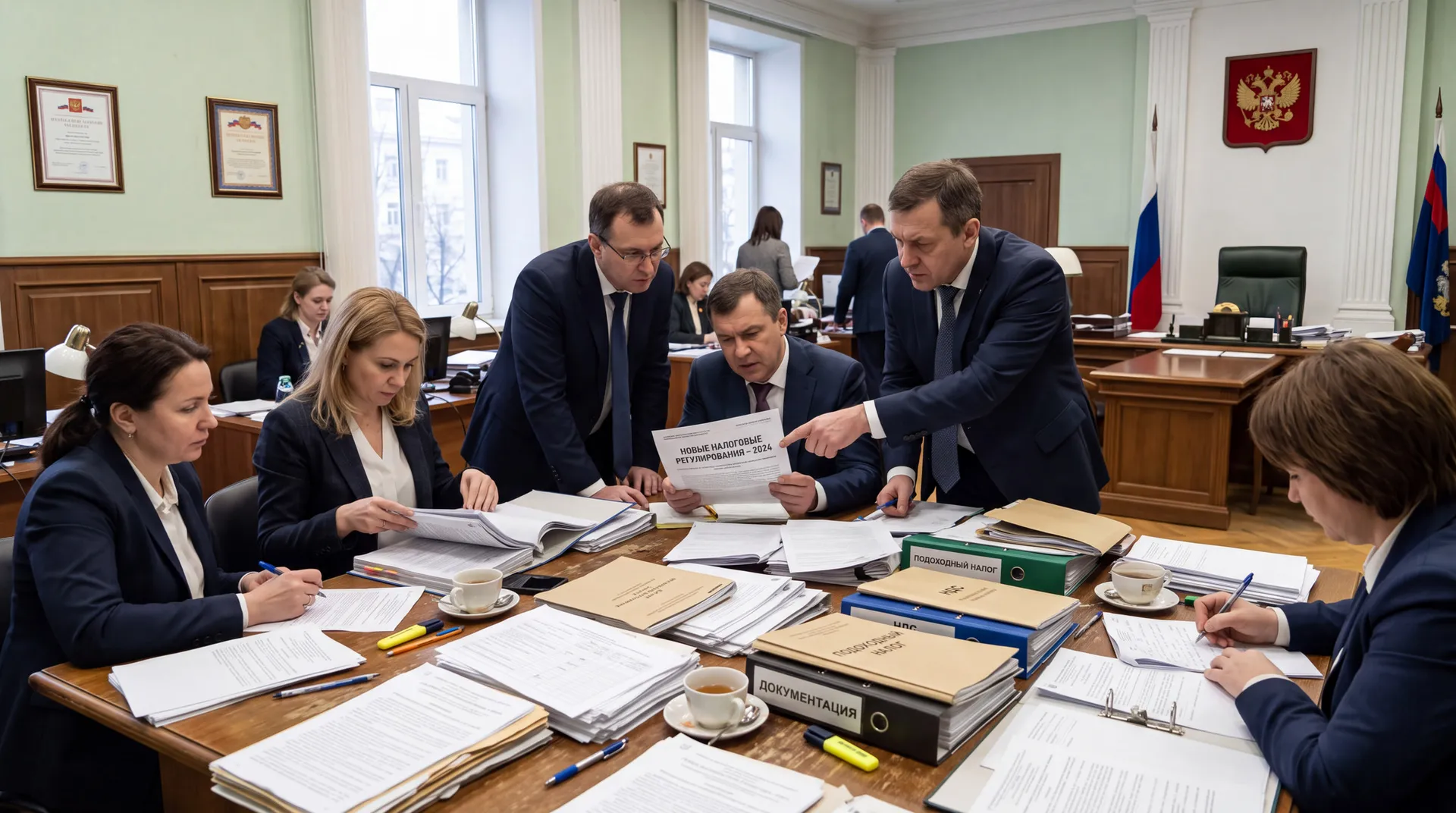
Neftegazstroy LLC from the Republic of Bashkortostan passed an on-site tax audit for 2021 at the Interdistrict Inspectorate of the Federal Tax Service No. 29. The audit was completed in December 2022: the companies added VAT for 34,703,876 rubles, penalties and sanctions. The Company did not dispute the decision and executed it in full.
On May 27, 2024, the Federal Tax Service for the Republic of Bashkortostan ordered a second on—site inspection - again for the period from January 1 to December 31, 2021 and again for all taxes, fees and insurance premiums. As a result of the repeated audit, the tax authority has already filed claims for 477,758,186 rubles for VAT and income tax alone.
The company has challenged the very decision to re-order the audit. There were two arguments. The first one is that the tax period has already been checked and the decision on it has been executed. The second is that the management staff actually participated in the first inspection, coordinated it, which means that the Federal Tax Service does not have the right to act as an independent controller of a lower—level inspection.
Three instances — the Arbitration Court of the Republic of Bashkortostan, the appeal and the Arbitration Court of the Ural District — supported Neftegazstroy and declared the appointment of a repeat inspection illegal. The Supreme Court overturned these decisions.
The Judicial Board for Economic Disputes referred to paragraph 10 of Article 89 of the Tax Code of the Russian Federation: a higher tax authority has the right to conduct a second on-site inspection in order to monitor the activities of a lower authority, regardless of the time of the previous inspection. The court pointed out that with such an audit, the tax authority can re—examine the taxpayer's activities for the already verified period, re-examine the same documents and the same circumstances, and, based on the results, determine the company's tax obligations in a new way, including new arrears and penalties.
The Supreme Court stipulated a restriction: a repeated on-site inspection must meet the criteria of necessity, validity and legality and should not turn into an undue burden for the taxpayer. However, the argument "we have already been checked" alone is not enough to declare a repeat check illegal.
Separately, the court distinguished between two independent disputes: the legality of the appointment of a re-examination and the legality of specific additional charges based on its results. The Supreme Court considered only the first issue. The legality of 477.8 million rubles in this case has not been verified — the company has the right to challenge the decision on additional charges in a separate proceeding.
The case was considered by the Ruling of the Judicial Board for Economic Disputes of the Supreme Court of the Russian Federation dated 03/18/2026 No. 309-ES25-9697 in case No. A07-18520/2024.
For companies engaged in foreign economic activity, the precedent means the following: a closed tax period with additional charges paid does not exclude the return of a higher authority to the same operations. If a second audit has already been scheduled, it is necessary to analyze the legal basis, authority of the authority and compliance with the procedure, and not just refer to the results of the first audit.
Related materials:
- The Federal Tax Service "glued" one-time applications into one contract and imposed a fine on the entire annual revenue.: how not to be in the place of company X — another analysis of additional payments from the Federal Tax Service for the company's transactions
- The customs service transmits to the Federal Tax Service data on discrepancies in the Unified State Register of Legal Entities for 3 days. What data on foreign economic activity transactions gets into the tax
- The Federal Tax Service clarified its position on paper transportation documents: inspections will begin at the end of 2026 — which inspections the Federal Tax Service will prepare for this year