The monitoring covered product cards on both platforms, and as a result, marketplaces independently blocked 37% of them. Only 8% of the checked cards met the mandatory requirements of the legislation — in other cases, the sellers either did not provide information about the declarations of conformity, or were not registered in the Honest Sign system.
The territorial departments of Rospotrebnadzor conducted inspections in the regions of registration of sellers: in Kalmykia, Komi, Moscow, Moscow and Novosibirsk regions, Udmurtia and Chechnya. In 14% of cases, the goods had already been sold by the time of the inspection — the sellers were warned. In another 3% of cases, sellers promptly posted valid declarations of conformity after warnings. Additional clarification of the circumstances was required for 2% of the cards, and the review period for them has been extended.
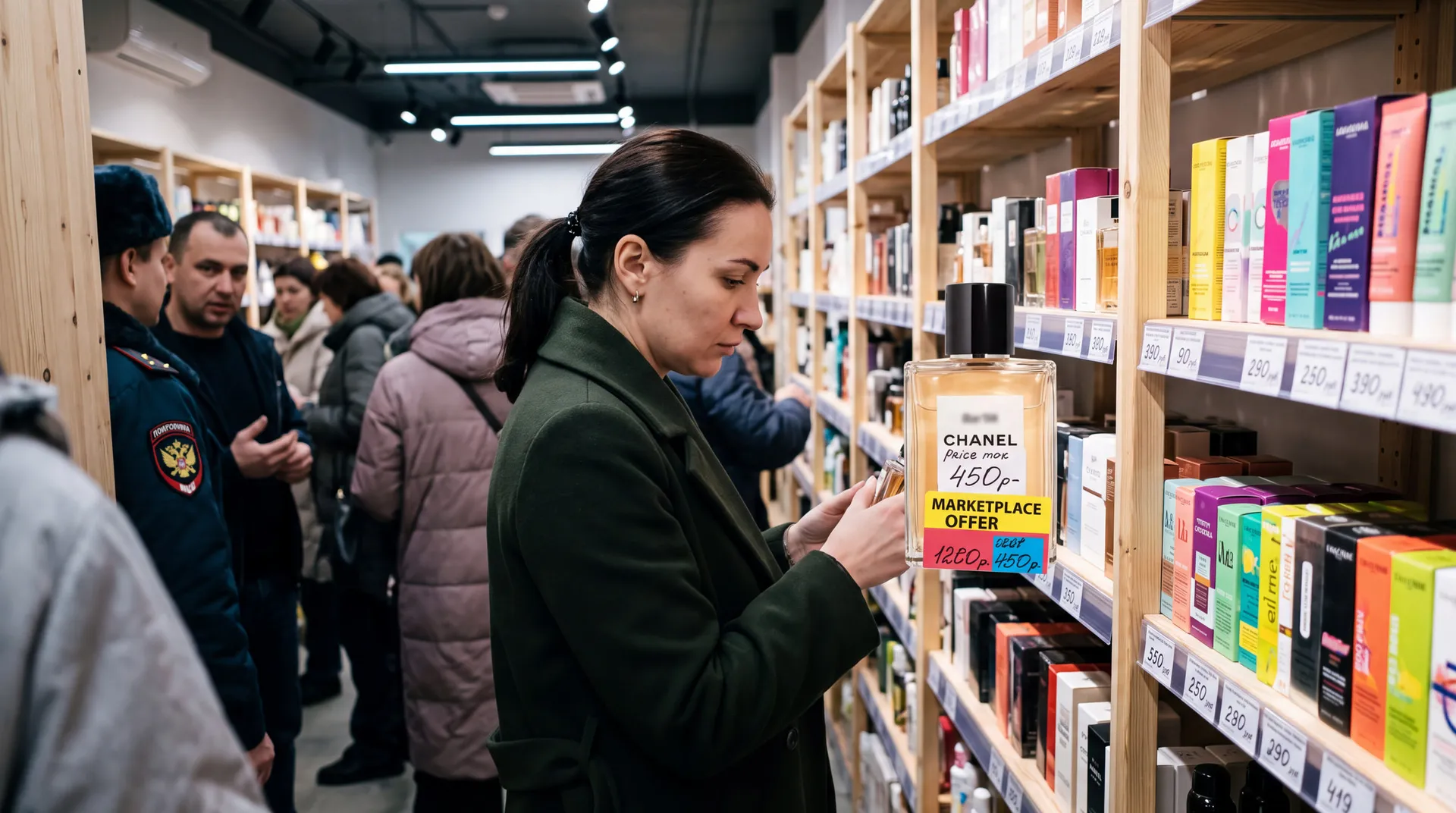
The price gap between the offers on the marketplaces and the official market turned out to be multiple. Two thirds of the products studied (67%) cost from 359 to 3,000 rubles. Original Chanel perfumes from authorized distributors start from 16,500 rubles, lipstick — from 9,000 rubles. Such a price spread in itself indicates a high probability of counterfeit or gray imports.
A separate layer of the problem is cross—border trade. The cards of foreign sellers accounted for 44% of all those included in the monitoring. It is this segment that is most difficult to cover with standard control tools: a foreign seller often does not register in Russian labeling systems and does not issue declarations of conformity according to the technical regulations TR CU 009/2011 "On the safety of perfumery and cosmetic products". The absence of information about the declaration was recorded in 75% of the checked cards.
For importers and Russian sellers working with cosmetics and perfumes, the inspection identified a specific risk perimeter. Selling without a declaration of conformity according to TR CU 009/2011 and without registration in an Honest Sign is grounds for blocking the card and administrative warnings, regardless of whether the product has been sold or not yet. The next step after the warning is an administrative case and a fine. Sellers who have received warnings about products already sold should prepare documents in advance confirming the legality of delivery and certification.
Related materials:
- Product cards on marketplaces: new requirements from October 1, 2026 — what should be in each card from October 1 so that it is not blocked
- Counterfeit on marketplaces: new requirements and risks — what is the threat of counterfeiting to the seller and how to avoid it
- Parallel import: a magic word that you misunderstand — where is the boundary between parallel import and gray import