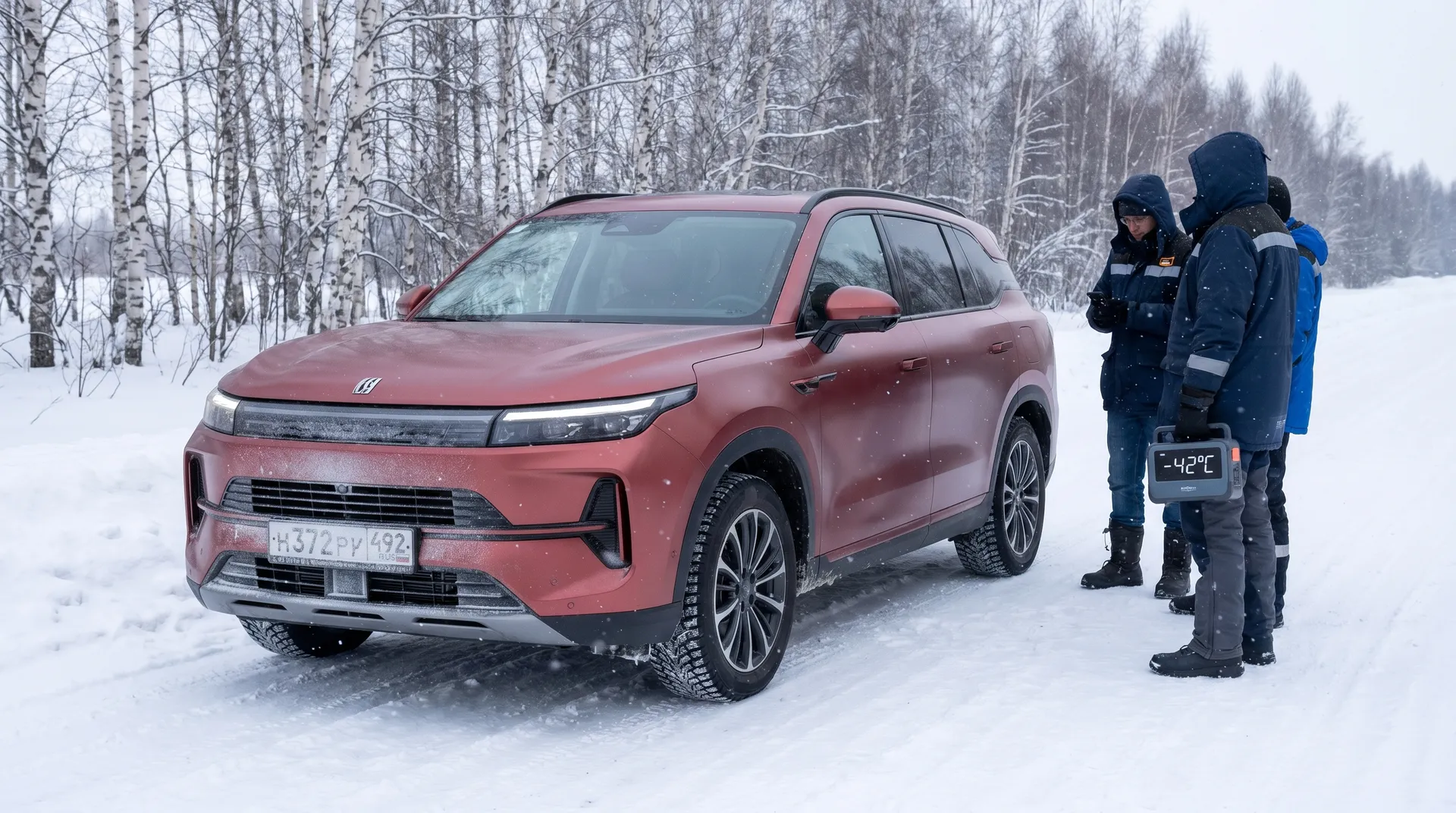
For three years, Chinese electric cars were sold in Russia with one caveat: "it works, but they sit down faster in severe frost." The battery pack loses up to 40% of its capacity at -20°C, and even more at -30°C and below. For most Russian regions, this is not a private problem, but a systemic one.
Chinese manufacturers who have taken over the Russian car market have received feedback from dealers: buyers want EVs, but they are afraid of the Siberian winter. Now— the solution.
What exactly is being adapted
Three technical changes for the Russian version. First: a reinforced battery with a higher heat capacity and modified chemistry — capacity losses at -40 °C are reduced to 15-20% instead of 40%. Secondly, a heat pump instead of a simple resistive heater is more efficient at low temperatures and consumes less energy. Third: active heating of the battery pack when parking in the cold — pre-heating before driving through the app.
These are not cosmetic changes, but a redesign of the thermal management system.
Who is the first to enter the market
BYD adapts the Seal and Atto 3, mass—produced models with a wide dealer network in Russia. SAIC (MG and Maxus brands) — commercial transport: vans and LCVs for urban delivery routes. Geely — more budget segments. The first deliveries of the adapted versions are in the third quarter of 2026, and the expansion of the model range is expected by the end of the year.
Why it is important for foreign economic activity and logistics
For logistics companies considering electrification of urban delivery routes: adapted electric LCVs from SAIC are a practical solution for urban delivery in Russian conditions. The cost of an electric ride in the city is significantly lower than on an internal combustion engine. The problem of frost resistance was the main barrier.
For importers of commercial vehicles: a new category for testing in the fleet will be introduced in the third quarter. As long as the Central Bank keeps the rate high, the argument in favor of reducing operating costs through electric transport is getting stronger.