Russia is one of the largest importers of coffee in the world. Raw and roasted coffee, coffee mixes, instant coffee, coffee capsules — most of this assortment is imported from Brazil, Vietnam, Colombia and other countries through various settlement and logistics schemes. Starting from September 1, all this is subject to mandatory digital labeling.
What exactly is labeled
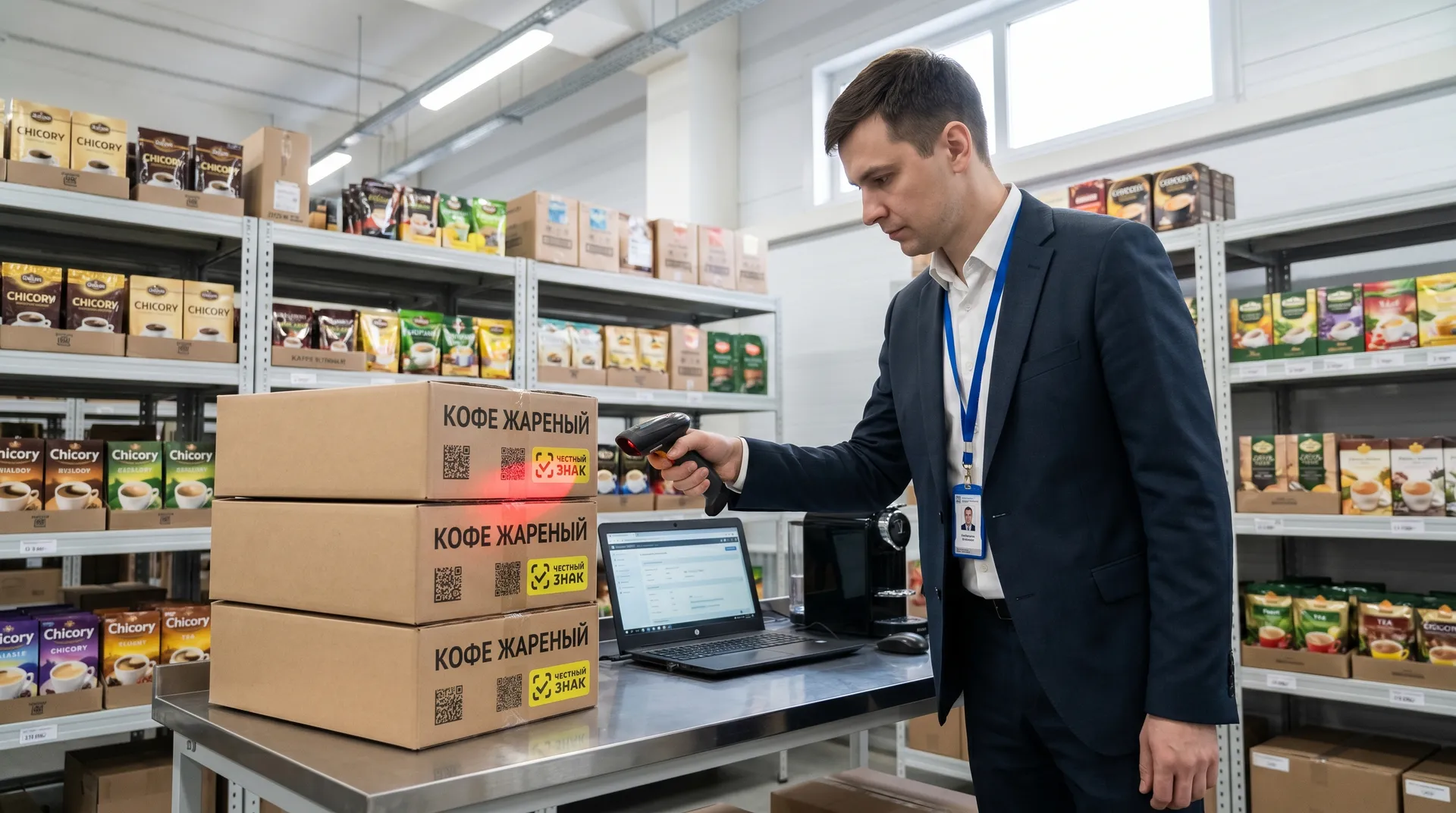
Coffee beans and ground coffee — all kinds. Coffee substitutes and chicory are herbal alternatives popular in the "healthy food" category. Ready—made products based on coffee, tea or mate - instant coffee, coffee drinks, ready-made tea mixtures, including those with additives.
This is a wide range — almost the entire range of the coffee category is on the shelves of stores and marketplaces.
A parallel with perfume labeling
On September 1, two labels will come into force simultaneously — perfumery and cosmetics (perfumes, deodorants, care products) and coffee. For companies importing both (for example, large distributors of consumer goods), there is a double burden of training at the same time.
The algorithm is identical: registration with Honest Sign (if not already registered), ordering labeling codes for each item of the assortment, applying codes to all leftovers by September 1, embedding the code order in the standard import process for future shipments.
The relationship with caviar labeling is a case-by-case accounting
Starting from June 1, 2026, instant accounting for resale has been introduced for sturgeon and salmon caviar — each jar is tracked individually at all stages of turnover. This is a pilot mechanism for categories with a high risk of fraud.
Standard labeling has been announced for coffee so far, without case—by-case accounting - but the precedent with caviar shows that the next step may be to tighten it for other categories if problems with counterfeiting come to light.
What should coffee importers do now
To audit the assortment according to HS codes — to determine the exact list of items that fall under the requirement. Registration in the "Honest Sign" takes time — to start the process at least 2 months before the deadline, that is, before the beginning of July.
For companies with large inventory balances: prioritize which items to label first (goods with the longest shelf life and the largest turnover).
Take into account the technological fee from September 1, 2026 — for electronics it is up to 5,000 rubles per unit, for food products the collection parameters are specified separately by category.