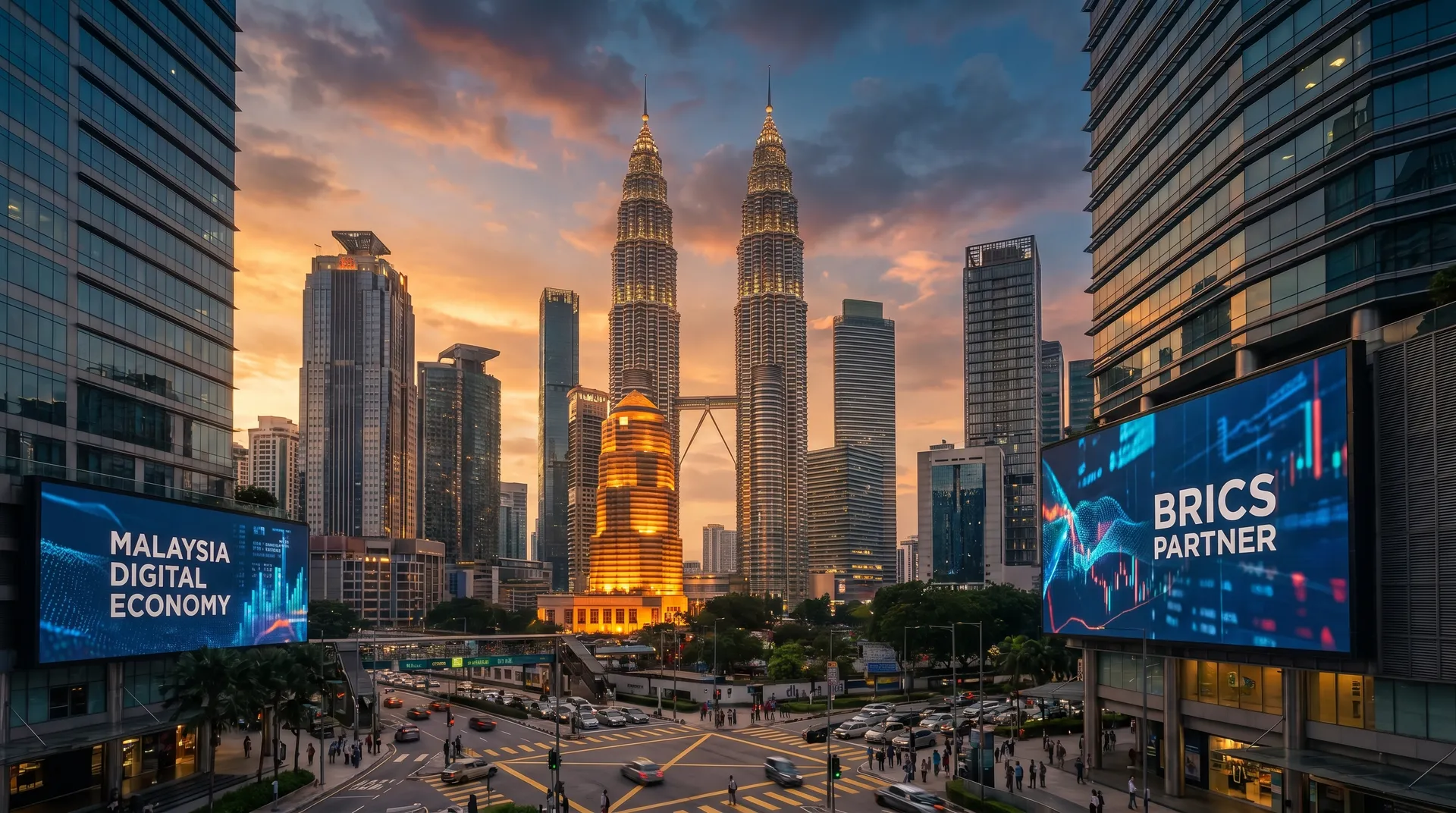
Malaysia rarely gets into the focus of the Russian foreign economic activity media - attention is traditionally focused on China, India, Vietnam. But the status of a BRICS partner since 2025 and the statement about the "digital economy" is a signal that the country is purposefully integrating into the infrastructure of the bloc.
Why Malaysia is important for Electronics
Malaysia is one of the world's largest semiconductor assembly and testing centers. Penang is called the "Silicon Valley of Asia" in Malaysia, where the production facilities of Intel, AMD, Texas Instruments, Bosch and dozens of other companies are located.
For Russia, which is faced with restrictions on parallel imports of IT equipment from major Western brands (Acer, ASUS, HP, IBM, Intel, Kingston, Samsung, Cisco have been excluded since May 27), the Malaysian market is a potential channel for alternative components. Many components manufactured in Malaysia technically belong to other jurisdictions, but physical production in Malaysia opens up other logistical and customs opportunities for re-export.
What does "digital economy" mean in the context of BRICS?
The statement by the Director General of the Malaysian National Security Council points to a specific area: digital trading platforms, settlement systems, and e-commerce between the bloc's countries. This is reflected in the initiatives of BRICS Pay and the development of CBDC infrastructure - Malaysia is considered as a potential node in this network for the ASEAN region.
Geographical advantage
Malaysia borders Singapore (the largest financial hub in Southeast Asia) and is located on the Strait of Malacca, one of the most important maritime trade routes in the world, through which much of the trade between the Indian and Pacific Oceans passes. This is an alternative to the Hormuz route for part of the cargo flows from the Persian Gulf to East Asia. Although we are talking about a different region, the general principle of route diversification is applicable.
What does this mean for Russian business right now?
There are few direct ready—made schemes for working with Malaysia through BRICS yet - the partner status is new, the infrastructure is under development. But the direction should be studied in advance: for electronics companies, Malaysia as a source of components, for logistics companies, Malaysia as a potential transit hub for Southeast Asia, and for fintech companies, to monitor the development of digital settlement initiatives with the participation of Malaysia.