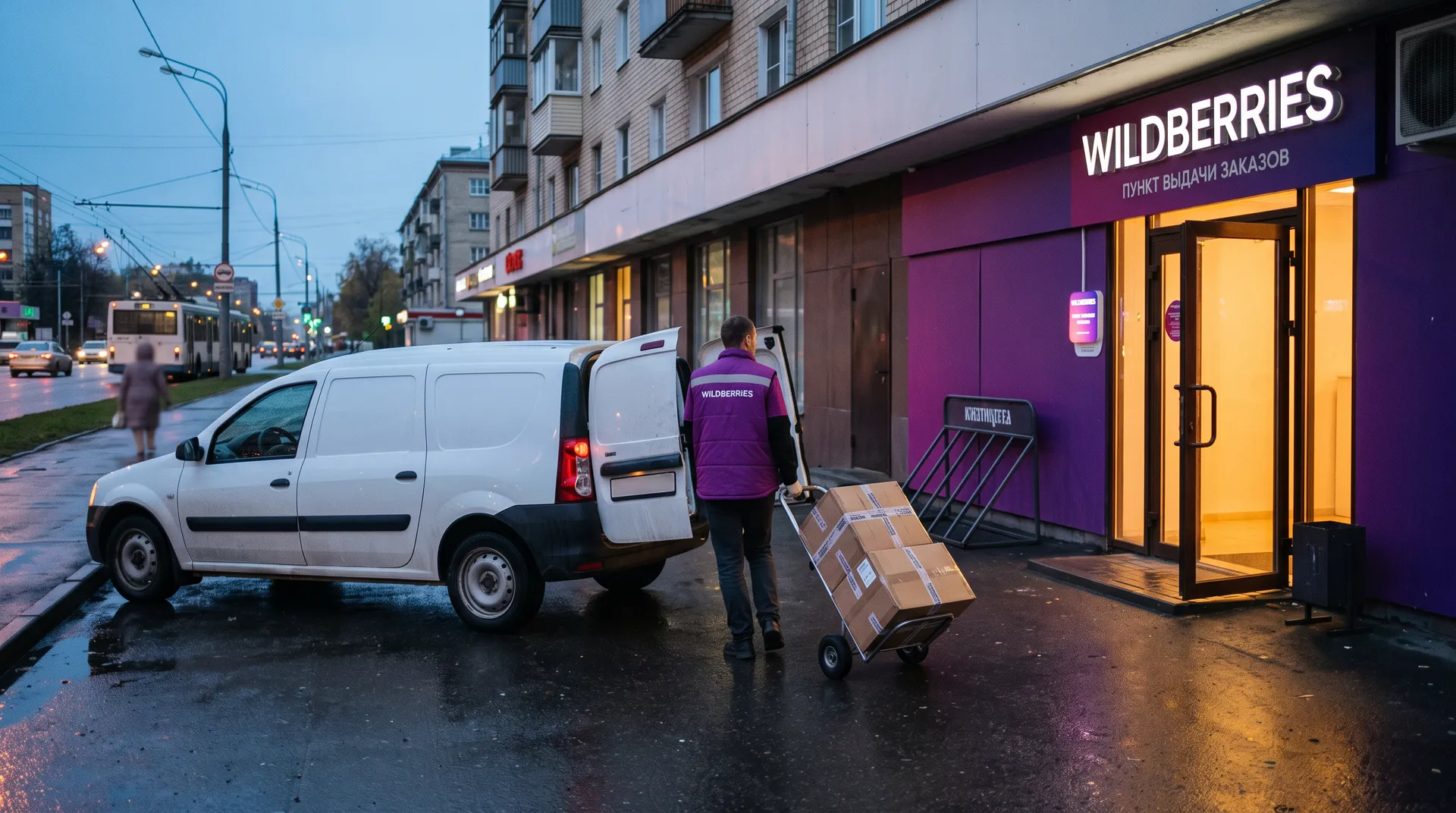
Wildberries has opened a second channel for sellers to accept goods on the FBW model. Starting from August 15, 2026, shipments can be transferred not only through the marketplace warehouse, but also through the order pick-up point. For preparing for warehouse processing using this method, the site deducts 5 rubles per unit of goods.
A separate detail of this scheme is that the localization index does not apply to such shipments. For sellers from regions where the nearest acceptance warehouse is several hundred kilometers away, this changes the calculation: the coefficient that used to make remote shipping more expensive disappears, and instead of the main shoulder to the warehouse, a short shoulder to the nearest warehouse appears.
Since August 15, the reverse logistics has also changed: the seller receives refunds not only through pick-up points, but also through other logistics facilities of the marketplace.
The third change of the same date concerns the discipline of supplies. Under-delivery of monopallets is subject to a fine of 5,000 rubles per pallet with a ceiling of 25,000 rubles per delivery. The maximum is reached already with five under-loaded pallets, that is, on an average machine, an error in the configuration closes the limit entirely.
You need to count the benefits on your own volumes. Five rubles per unit is 5,000 rubles for a batch of a thousand pieces. For a product with an average price of 300 rubles, this tariff consumes about 1.7% of the revenue from the batch, for a product for 3,000 rubles — 0.17%. The PVZ scheme clearly benefits from an expensive and compact nomenclature, and for cheap extras it requires a direct comparison with the mainline delivery to the warehouse, taking into account the localization index.
The procedure for the coming weeks is to calculate the cost of delivery to the nearest acceptance warehouse and to the nearest PVZ for each product group, put 5 rubles per unit and the localization coefficient on top, and select the channel for each group separately. In parallel, it is necessary to introduce a mandatory reconciliation of the number of pallets before the departure of the machine: the price of one error is now fixed.
Similar materials on the website
- Wildberries has drastically reduced the entrance fee for sellers: the registration fee has dropped 6 times — the last package of conditions for storage and acceptance for new partners