






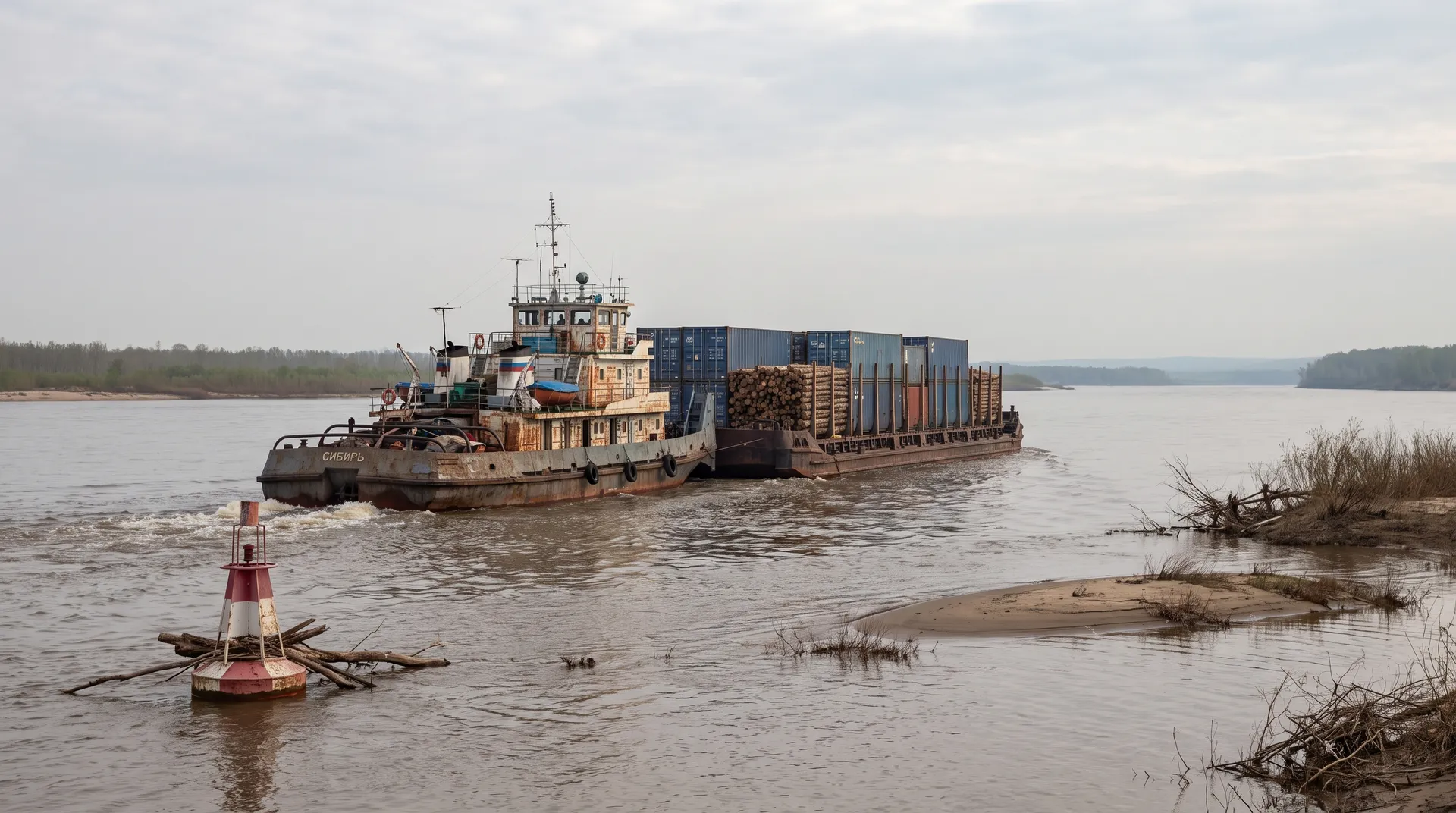
Beijing, Astana and Moscow are exploring the possibility of creating an alternative transport route that will connect the interior of China with the Arctic Ocean through the Irtysh and Ob river systems.
The geography at the heart of the idea looks logical. The 4248 km long Irtysh River originates in the Xinjiang Uygur Autonomous Region of China, flows through Kazakhstan and flows into the Ob River in Russia, and the Ob goes to the Kara Sea - that is, into the zone of the Northern Sea Route. For the western provinces of China, thousands of kilometers away from their own seashore, this is a potentially short access to the sea.
There are several obstacles, and all of them are infrastructural.
- The first is the navigation window. The Irtysh River can remain frozen for up to six months a year. Combined with the July-October Arctic window on the sea shoulder, this provides a very narrow period of through transportation.
- The second is depth. The river is facing shallowing and siltation, and large-scale dredging operations will be required for regular navigation.
- The third is the "last mile" on the Chinese side. In Xinjiang, it is necessary to build an infrastructure connecting the Irtysh River with the densely populated east coast of China, from where the main cargo traffic flows. Without this, the route only serves Xinjiang itself.
The context in which the idea is discussed explains the interest. The Arctic route ceased to be an experiment in 2026: China's Sea Legend Shipping launched a regular service from Ningbo-Zhoushan, scheduling eight flights with an interval of about a week for the navigation season, with the last departure in early October. A South Korean operator followed the route.
What it means for the cargo owner today. There is nothing in the operational horizon: there are no schedules, tariffs and depths for commercial shipping, and the listed works are measured in years. Real decisions on the Asian direction are made between the sea arm of the Northern Sea Route, the railway through Kazakhstan and Zabaikalsk and the sea through Suez. The river corridor should be kept in mind as a plot, but not as an option for the 2027 budget.
Similar materials on the website
- Northern Sea Route: 20 days to Europe instead of 40 via Suez — the sea shoulder of the same route, which is already operating on schedule