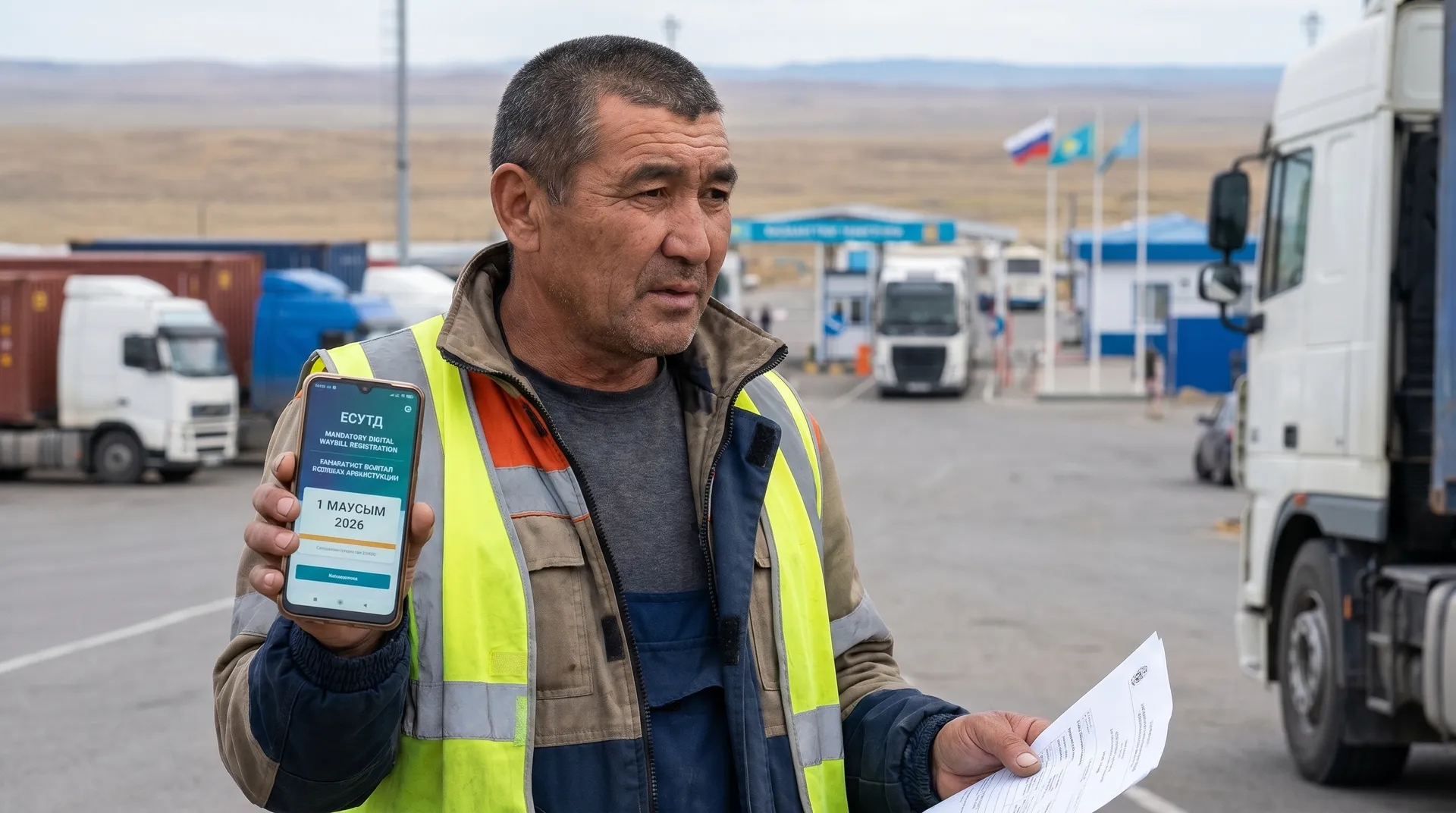
The Unified Transport Document Management System is the Kazakh equivalent of the Russian electronic bill of lading. The system works through the state portal esutd.gov.kz Starting from June 1, connection to it becomes mandatory for all carriers operating with trucks over 3.5 tons in Kazakhstan.
Who is affected
Technically— all of them. But for foreign carriers, including Russian ones, this means an additional operational task: registration in the system, setting up electronic TTN registration, training drivers and dispatchers.
There are three main scenarios for Russian companies: — carriers operating international flights from Russia to Kazakhstan with cargo transfer to the Kazakh side; — carriers operating transit flights through Kazakhstan (for example, to Uzbekistan or China); — Russian companies with subsidiaries or partners in Kazakhstan that use Kazakhstani vehicles.
Which is clear, which is not
The warehouse–to-warehouse scheme — one sender, one recipient, one flight — is handled relatively straightforwardly in the system. The electronic TTN is created before the start of the flight and is closed upon acceptance of the cargo.
Urban transportation is more difficult — one flight, 20-40 delivery points. There are no detailed explanations from the Ministry of Transport of Kazakhstan yet on how to issue and close electronic TTN for each point in real time. This creates operational uncertainty specifically for logistics companies with distribution routes.
Context: why is Kazakhstan introducing this
The EUTD is part of the general digitalization of transport control in Kazakhstan, which runs in parallel with similar processes in Russia (electronic TTN, SPOT) and in the EAEU as a whole. The logic is the same: a digital footprint for each shipment, the possibility of remote control, and a reduction in gray circuits.
Russia is following the same path — electronic waybills have been introduced as mandatory since 2024. For companies already working with the Russian ETRN, there is a base of understanding. It needs to be adapted to Kazakhstani formats.
What to do before June 1st
Register on the portal esutd.gov.kz — registration is available for foreign legal entities. Contact our Kazakhstani partners and clarify how they organize the registration on their part. For routes with multiple delivery points, wait for the Ministry of Transport to clarify or consult with a Kazakh lawyer.