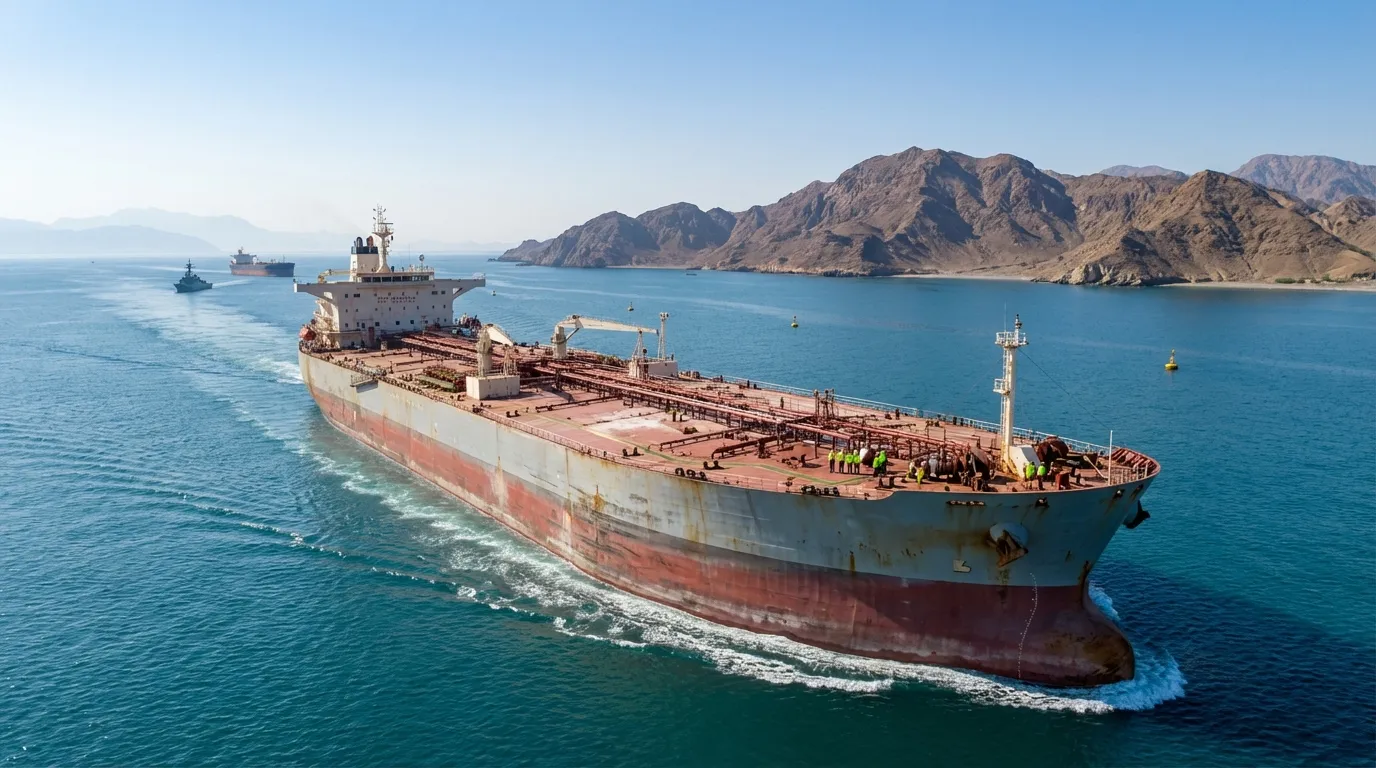
The oil shipping market has received a new price benchmark: in the Strait of Hormuz, freight rates for super-large VLCC tankers exceeded $14 per barrel in early March, which is almost 600% higher than a year ago. The assessment was made in the latest Oil Market Report of the International Energy Agency, which separately highlighted the impact of the situation around the strait on the cost of logistics and the availability of tonnage.
The agency described the key dynamics as follows:
"VLCC rates in the Middle East, Persian Gulf and Asian markets, which in February had already increased by $2.54 per barrel compared to the previous month, to $4.13 per barrel (plus 141 percent compared to the same period last year), exceeded $14 per barrel in early March, which is almost 600 percent above the level of a year ago," the agency's report says.
For carriers and cargo owners, this jump quickly turns into a chain of secondary effects. The rising cost of passage through the strait increases the pressure on insurance, ship availability, and flight planning, and then shifts to neighboring segments. According to the IEA, in February, rates on Suezmax in key areas of the Atlantic basin rose to levels of about $ 2 per barrel, and in early March exceeded $ 7 per barrel. This means that shipping is becoming more expensive on routes that are often used to balance supplies during disruptions in the Middle East.
The Aframax segment looks more stable, but there is also a noticeable increase in prices: in the North Sea in February, rates rose to about $ 1.79 per barrel. Such a picture shows that the market reacts not with one point, but with the restructuring of the entire network of available tonnage, when part of the fleet goes on hold, part changes areas of operation, and new risks are included in the price of each day of the voyage.
The agency pays special attention to demand factors. Strong interest in ship-to-ship transshipment at ports in the Gulf of Mexico has increased the burden on logistics, and improved conditions in the Caribbean following the easing of Venezuelan restrictions have added traffic on related routes. In practice, this leads to an increase in time-charter expectations and to the fact that "free" vessels disappear faster than the market has time to adjust rates.
For participants in foreign economic activity, the consequences will manifest themselves through the cost of raw materials and delivery schedules. Petrochemicals, packaging production, trucking companies and terminals feel this through the price of fuel and through shipping tariffs, which are recalculated in contracts and quotations. In the coming weeks, risk management will become a key task for importers and exporters: checking insurance conditions, fixing rates for the period, working with alternative supply arms and increasing the transparency of flight data for financial planning.