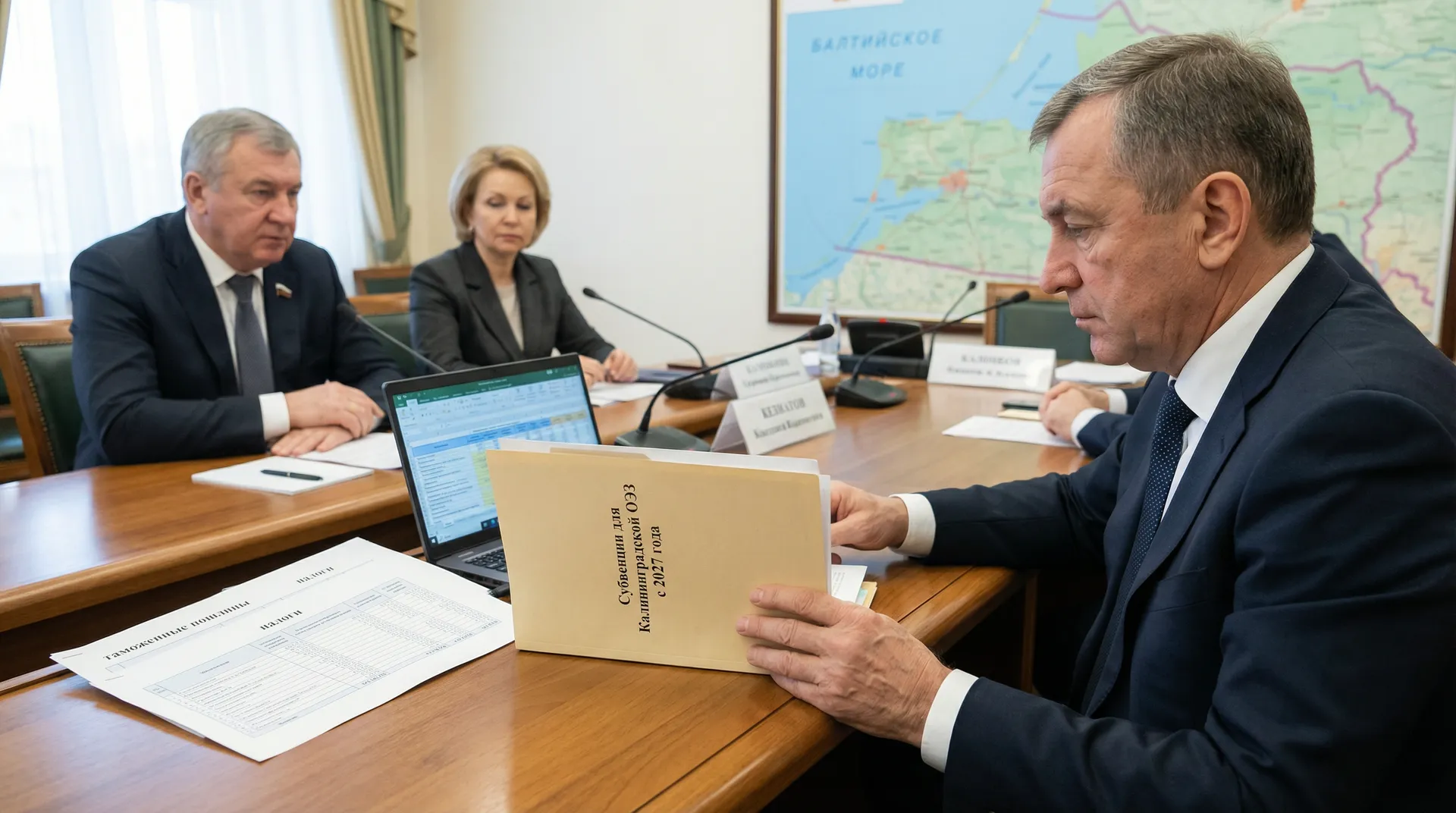
For businesses, this decision closes one of the main risks of the Kaliningrad regime: when legal changes change the burden on duties and taxes, the investment project receives a direct blow to the financial model. The new approach translates this risk into an understandable budget tool that can be taken into account in planning supplies, contracts, and investment schedules.
An important signal was sounded during the discussions in the Federation Council the other day in the region: the regional authorities are simultaneously seeking more flexible conditions for entry into the SEZ for industries where the payback is below average. Governor Alexey Besprozvannykh explained the logic of the proposal to lower the investment threshold for a number of areas, including logistics.:
"We have analyzed the profitability of these industries in the region and see that it is significantly lower than the national average. This confirms the expediency of reducing the investment threshold precisely in these areas."
The combination of subventions with the adjustment of residency conditions makes the Kaliningrad site more predictable for foreign economic activity and logistics projects focused on the import of components, processing and further distribution. In practice, companies will have more reason to fix long-term rates in contracts, lay routes through Kaliningrad facilities, and plan warehouse infrastructure with a horizon beyond 2027. The key issue for the market is shifting to the methodology for calculating compensation and documenting the costs that fall under the support mechanism.