Wildberries has switched to a volume tariff since March 2026: the return of the first liter costs 46 rubles, each subsequent one costs another 14 rubles. Previously, there was a fixed rate of 50 rubles. regardless of the volume. For goods with a volume of 5 liters, the refund price increased from 50 to 102 rubles (+104%), for 10 liters — to 172 rubles (+244%). Additionally, the site applies an increasing coefficient for repurchases below 75%: formula 1 + (75% − actual repurchase) / 100 increases the cost of reverse logistics in proportion to the deviation. With a 70% buyout, the coefficient will be 1.05.
Starting from June 10, 2025, Ozon has fully transferred the cost of processing refunds to the seller when working under the FBO model. Previously, the marketplace took over part of the costs. Now one return of a small product costs 108-120 rubles, depending on the destination. Clothing and footwear were the hardest hit, categories with historically high bounce rates.
Sellers on the FBS and DBS models faced their own problem: refunds from pick-up points have to be collected independently or through a logistics operator. Consolidation and re—processing of goods in a warehouse takes longer than with FBO, as the cost of return logistics under these schemes has increased by 20%.
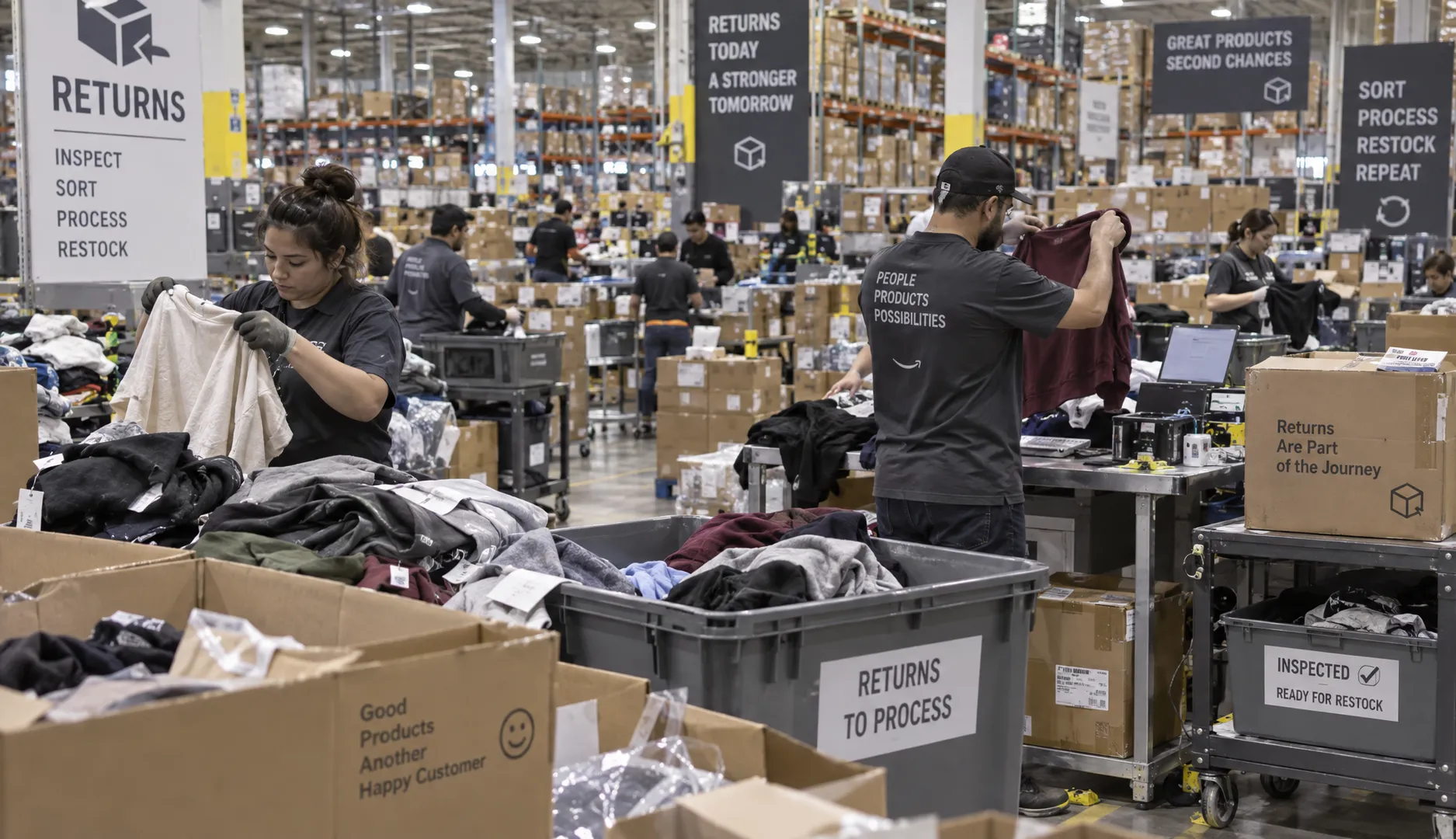
The mechanism for transferring costs to the buyer is direct. If there are 2000 rubles out of 100 ordered shirts. only 30 are redeemed, the seller pays 7-10 thousand rubles for the return of 70 units. This adds 230-350 rubles to the price of each shirt sold. Goods that have been in transit for 7-14 days or longer are frozen in circulation and are not available for resale. After opening the package, some of the returned items are classified as discounted or illiquid.
According to the calculations of PEC: Fulfillment, a combination of three factors — the diversion of working capital, an increase in the cost of return logistics and the cost of self—consolidation of refunds - will lead to sellers with a buyback percentage of about 30% in the segments of clothing, footwear and related categories by the end of 2026 to raise prices by 8-12%.
For importers who supply goods to Russian marketplaces, the new tariffs mean that the unit economy needs to be recalculated even at the pricing stage: the previous calculation models, based on fixed return rates, lower the cost. Categories with traditionally high failure rates require a separate profitability analysis, taking into account the current tariff grids of both sites.
Related news:
- Refunds on marketplaces: how to keep records correctly and not overstate revenue — how to account for refunds correctly and not overstate revenue
- From October 1, 2026, the rules for returning goods on marketplaces will change — as the procedure for returning goods has changed since October 1
- PVZ costs increased by 20%: marketplaces are changing the logistics model — why are the costs of pick-up points increasing
- Sellers' expenses on marketplaces have reached 47.8% of the product price — what proportion of the product price are sellers' expenses taking
- From a minus to a plus on marketplaces: a step—by-step 4.5-fold brand growth case - a brand case that went to the plus on marketplaces