






Zabbix collects hardware and software metrics, compares them with set thresholds and, in case of deviation, sends a notification to the duty engineer in a work chat. On monitoring dashboards and the network map, the system shows exactly which node needs attention, without separate checks of each component.
“The system records, for example, a lack of free space on a server, an increase in equipment load or unusual network activity. Instead of separate checks, there is an overall picture of system status on one screen,” the terminal’s press service said.
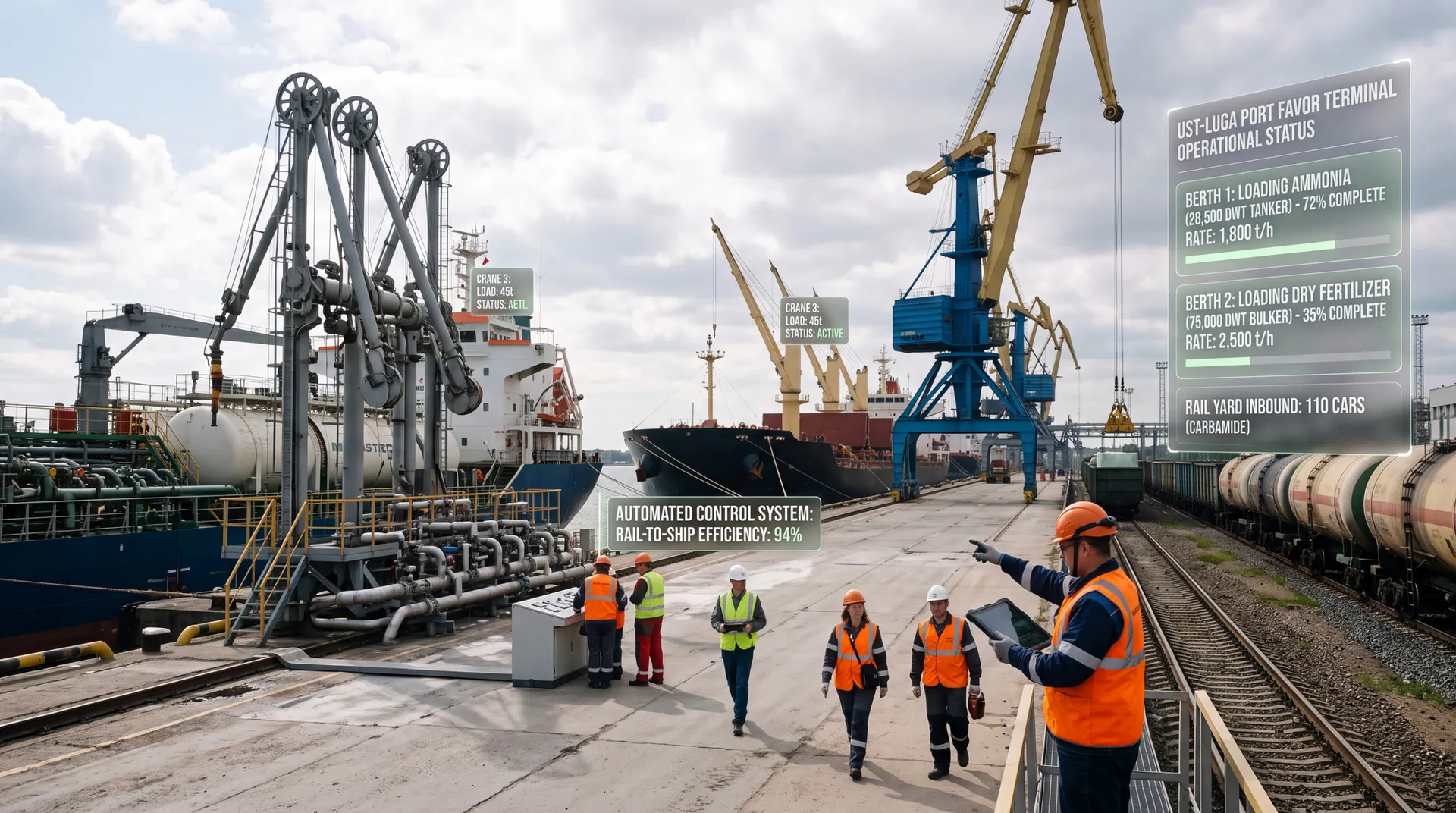
The Port Favor terminal is part of the Port Alliance group of companies and is being built to a design by Morstroytekhnologiya LLC. It is intended for handling all types of fertilisers and will be able to serve three bulk carriers with a deadweight of 5,000 to 114,000 tonnes at the same time, shipping over 200,000 tonnes from three berths. The design cargo turnover of the first stage is 7–8 million tonnes per year, rising to 14 million tonnes in the future.
The terminal’s first stage, a process line for liquid cargo, was launched on 13 December 2024. In 2025, 560,000 tonnes of ammonia were shipped through the automated liquid cargo complex. The dry mineral fertiliser handling line, after which the terminal will reach full capacity, is due to start operating during 2026.
Digital infrastructure here supports data exchange, coordination of operations and continuous cargo handling. A failure in IT systems can stop document flow and vessel reception just as effectively as a breakdown of handling equipment. Preventive monitoring reduces the likelihood of unplanned downtime, a critical parameter for exporters working to tight shipping schedules and freight contracts.
In addition to Zabbix, the terminal has previously tested a digital control loop for fertiliser handling, introduced cascade loading technology and completed the installation of 86 aspiration units. Together, these solutions form the terminal’s digital and technological base by the time it reaches design capacity.
Related news:
- Mariupol port is being prepared to become the region’s cargo hub — how port infrastructure in southern Russia is developing
- Kazakhstan deepens the port of Aktau: Middle Corridor cargo flow to grow by 30% — how the Middle Corridor across the Caspian is developing
- Two railway corridors to North-West ports will add 50 million tonnes of capacity — new rail capacity for exports through the ports
- Transport infrastructure register to switch to QR codes and faster extracts — how the accounting of transport infrastructure is changing