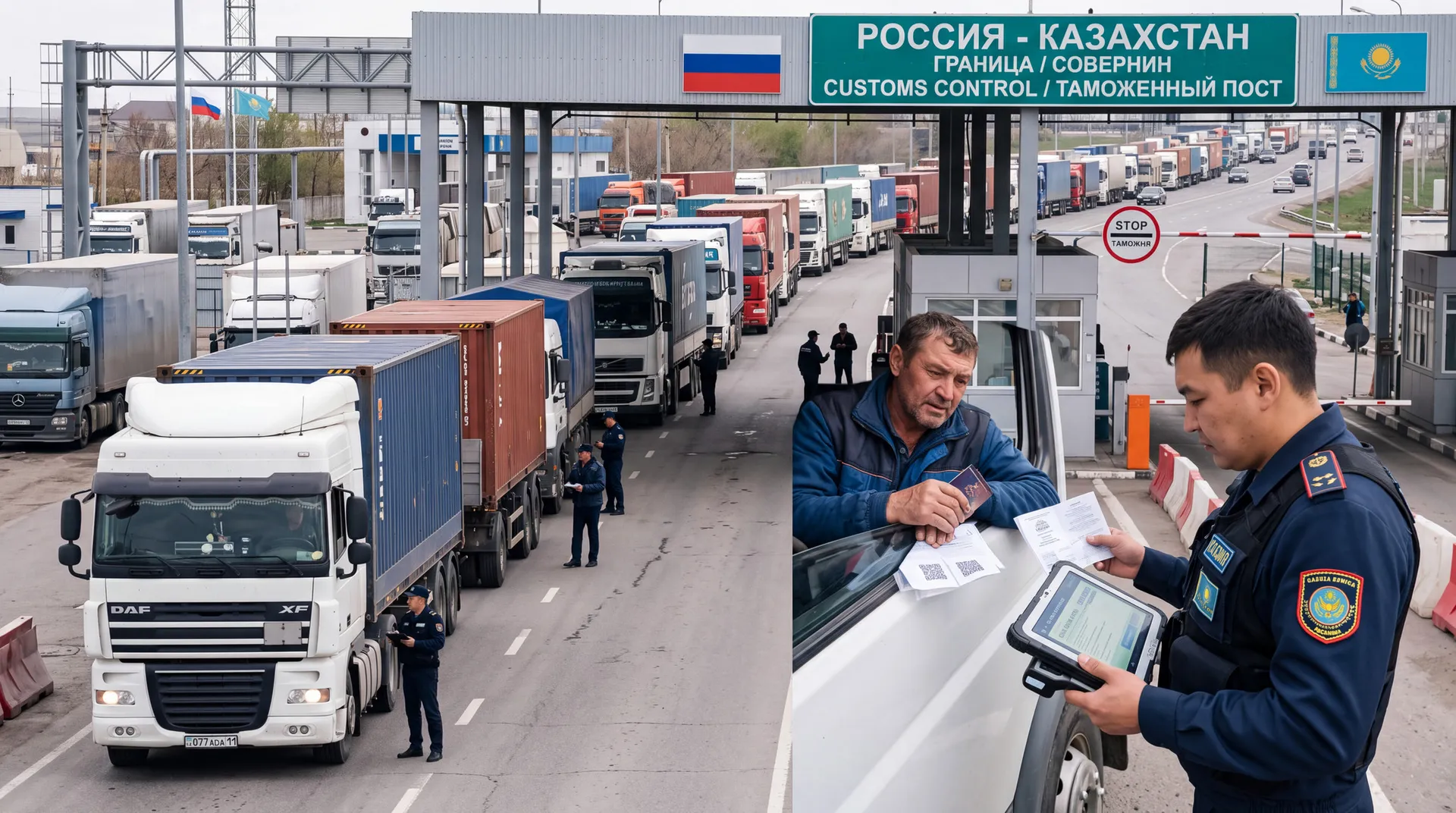
Estonia has prematurely closed the Luhamaa automobile checkpoint on the border with Russia. The decision was made earlier than the scheduled work stoppage time.
The news stands on a par with other events of the week in the Baltic direction, and it is pointless to read it separately. Latvia is discussing the introduction of a 300% tariff on grain shipments from Russia and Belarus and verification of the origin of transit shipments, as well as seeking a common position with Lithuania and Estonia. Latvia and Lithuania are simultaneously considering a ban on the transit of Russian grain. All this is happening against the background of the fact that Russian exporters have become more active in the Baltic direction after problems with routes through the Black and Azov Seas.
A characteristic sequence develops: the cargo is looking for a bypass route, the route receives a load, and restrictions appear on the route.
The practical effect of closing one checkpoint is wider than it seems. A closed crossing does not disappear from logistics — it is redistributed. The flow goes to neighboring points, where the waiting time increases, and with it the cost of equipment downtime and the risk of disrupting slots in the recipient's warehouses. For the carrier, this is an increase in the cost of the flight, even at the same rate.
What to do in the next few days. To raise all flights routed through Luhamaa and reassign them to the existing crossings, notifying cargo owners in writing about the delay. Calculate the leverage and travel time for new routes, rather than using last year's queue statistics. In contracts with customers, check how the costs are distributed when the checkpoint is closed by a decision of a foreign state.: This is a classic dispute area, and it is resolved by wording, not by negotiations after the fact.
And keep the entire Baltic direction in sight. If restrictions on grain transit move from discussions to decisions, it will be necessary to rebuild not individual flights, but the entire scheme.