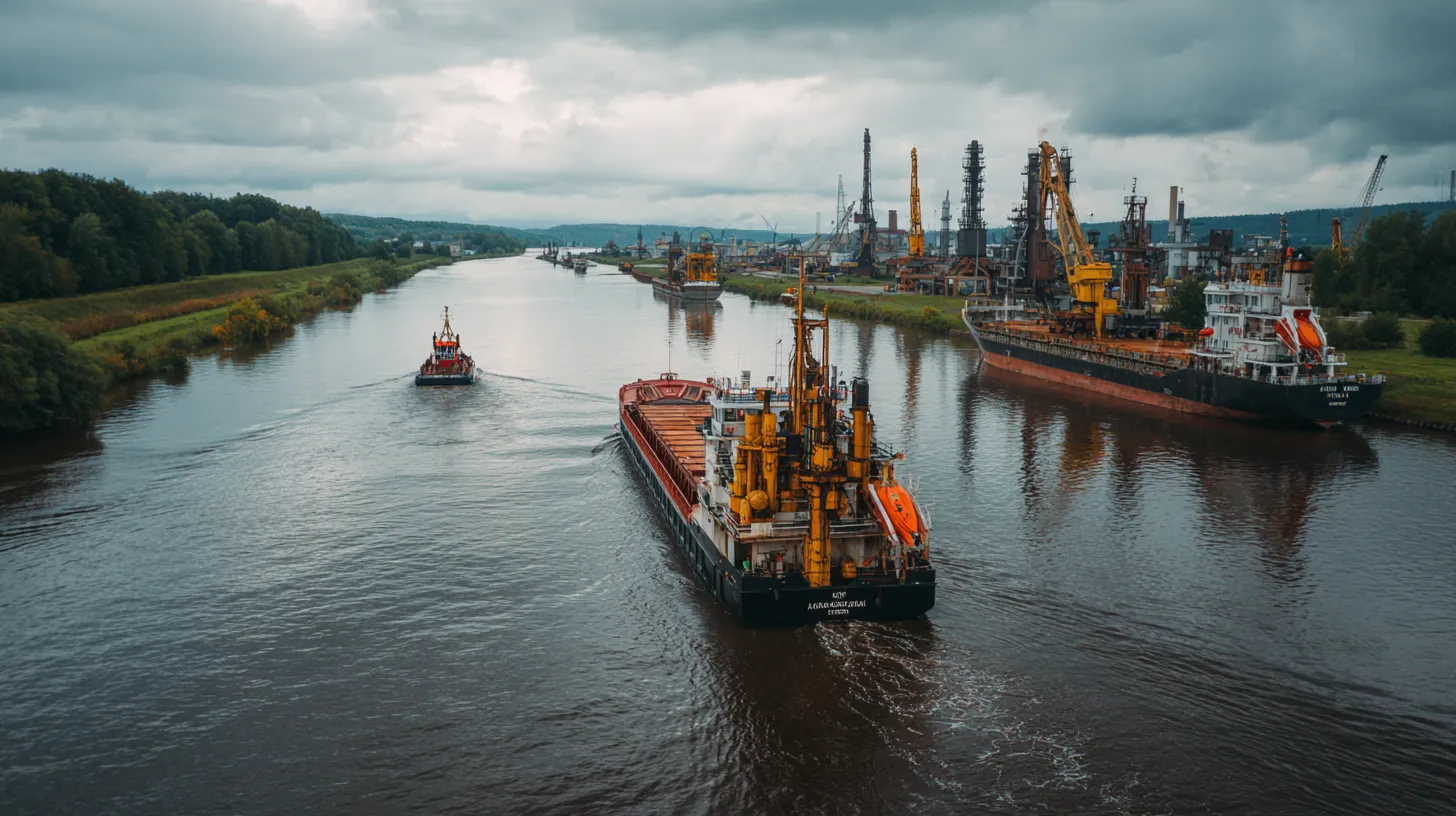
According to experts, currently the depth in the canal sections does not exceed 3.8 meters due to overflows, although 4.2 meters are indicated on paper. This forces ships to load only 70-80% to avoid the risk of precipitation. As a result, underloading leads to losses, which representatives of the shipping business estimate at $15-20 million per year.
The port of Olya is showing an increase in volumes, but without upgrading the canal it will not be able to cope with the growing flow of goods, especially in the context of Iran's growing interest in the supply of wheat and other goods through the Caspian Sea. New vessels adapted to the current parameters of the VKMSK, such as dry cargo ships of the RSD49 type, are already being designed. However, their potential is limited by the current depths.
Alexander Sharov, who heads the Rusiranexpo company, considers the abandonment of dredging to be a step blocking the strategic development of the corridor. He emphasizes that Iran plans to redirect large grain purchases from the Black Sea ports to the Caspian direction, which is up to 5 million tons annually. If the channel is not deepened, these volumes will remain inaccessible to Russian carriers.
Work on deepening the canal has been underway since 2023. At that time, over 10 million cubic meters of soil were extracted. In 2024, there will be almost 7 million more. For 2025, the budget for dredging measures is 3.53 billion rubles. However, against the background of current statements about the possible suspension of these works, concern is growing in the industry.
Meanwhile, the North–South transport corridor is showing steady growth: if in 2022 cargo traffic amounted to 14.5 million tons, then in 2024 it reached 20.5 million. This confirms that infrastructural modernization is not just desirable, but extremely necessary.
Against the background of these processes, an alarming trend is observed in the Astrakhan region – three ports have been put up for sale, and dozens of river-sea class dry cargo ships are leaving the market, which has not happened for more than two decades.
Abandoning the deepening of the Volga-Caspian Canal may become not just an economic decision, but a strategic mistake. If current parameters are maintained, Russia risks losing its logistical advantage and slowing down the development of one of the most important transport routes towards Iran and the countries of the South.