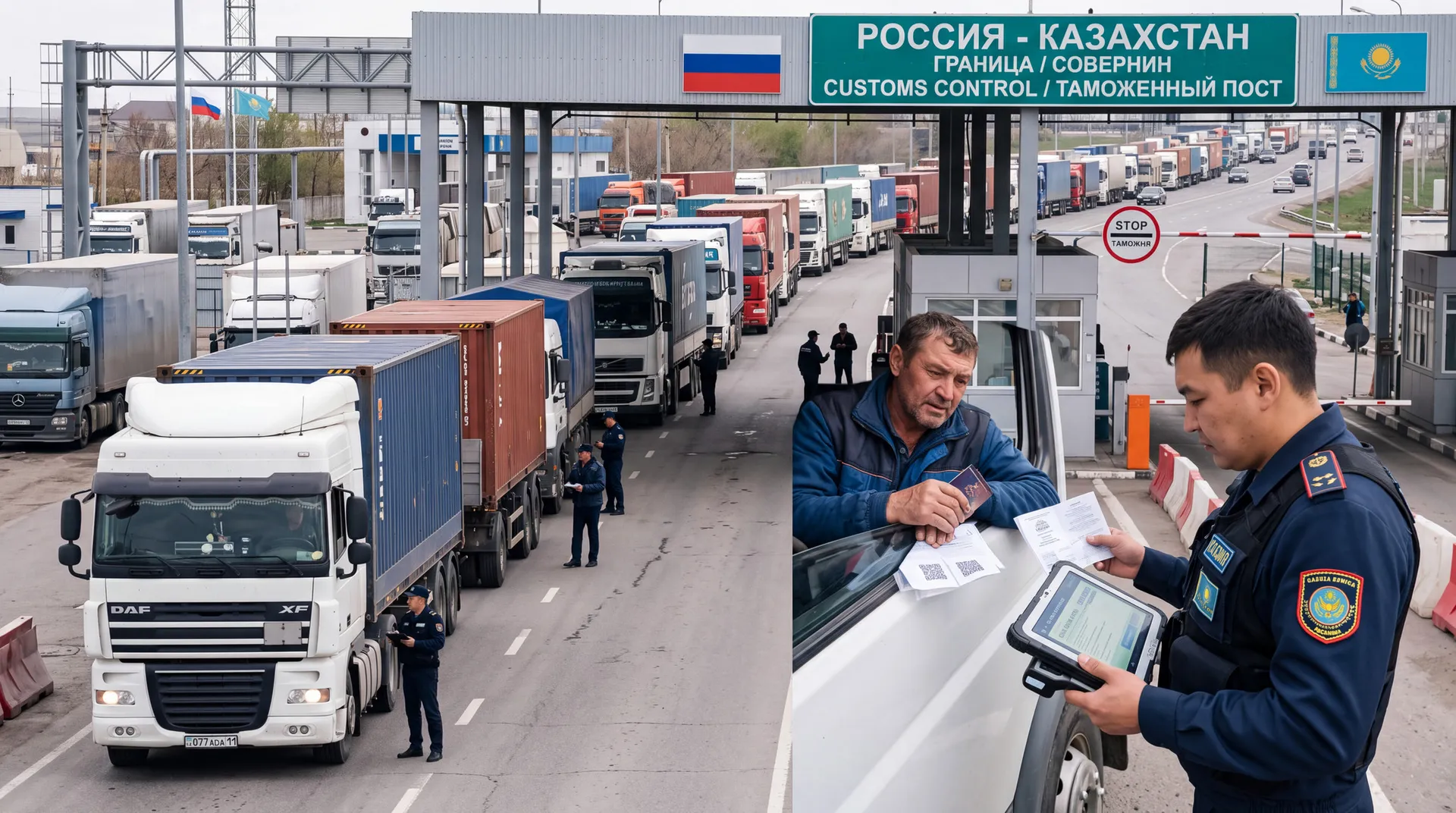
Russian importers have begun to massively recalculate the economics of supplies through the EAEU countries. The reason is a new wave of customs surcharges at increased rates on goods that are bought from sellers within the union, but produced in countries from the list of "unfriendly". Lawyers and entrepreneurs record cases when such cargoes began to fall under increased duties, although previously, when importing products with the status of EAEU goods, no additional payment was usually required.
The essence of the conflict lies in the discrepancy between the logic of EAEU law and current control practices. Within the union, the duty is paid once upon release for domestic consumption, after which the goods receive the status of the EAEU and move freely. In 2023, the FCS clarified the approach that the business considered stable. Now market participants are talking about a reversal. The article provides an assessment that cases have been recorded since 2025, including cosmetics purchased from Kazakhstani sellers.
The range of bids is high. According to the list, the increased rates are valid until the end of 2027 and may amount to 15-50%, depending on the category. For perfumes and cosmetics, the difference with the base duty is particularly sensitive: examples are given where the base tariff of 6.5% turns into 20-35% for individual items. This directly affects products that are actively sold through marketplaces, primarily clothing and cosmetics.
The market perceives what is happening as an attempt to block schemes for circumventing anti-sanctions measures and increase budget revenues. The text contains the formulation of the consultants' position: "The change in approaches ... is caused by the desire to stop care schemes ... as a result of which the budget loses revenue."
At the same time, businesses are increasingly demanding clear procedures, because legal certainty is important for contracts, pricing, and procurement planning. Lawyers point out that the reasons for the additional charges are controversial and that there is a gap between practice and regulatory detail.
A separate blow comes through logistics. Against the background of increased inspections, the market is already seeing an increase in the cost of delivery, and the uncertainty itself is forcing companies to reduce their product range and review consolidation chains in the EAEU. The next risk for foreign economic activity is simple: if judicial practice supports the new approach, price increases will become systemic and will quickly be transferred to retail.