Starting from September 1, 2026, restrictions on the issuance of re-labeling codes for light industry goods of the second, third and fourth waves will begin to apply in Russia. The rules are established by the Decree of the Government of the Russian Federation dated 11/21/2025 No. 1859.
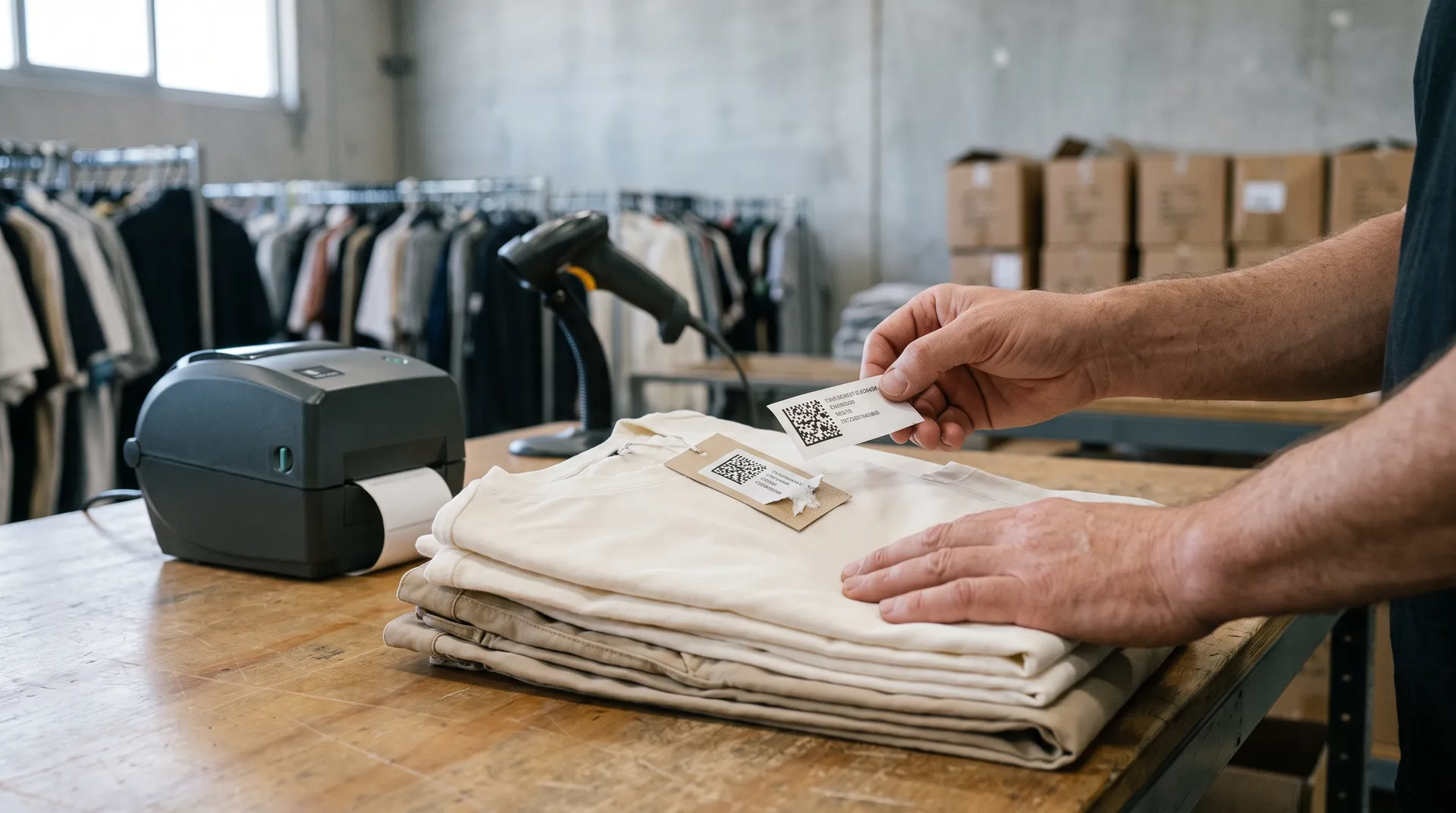
Re-labeling is needed when the labeling code is lost, damaged, or not readable. In such a situation, the product is not written off: a new code is received in the system and applied to the product. It is this procedure that is now limited in scope.
The mechanics are simple. The company will not be able to order more re-labeling codes than it has legally purchased goods. The limit is calculated separately for each INN, meaning that intra-group transfers between legal entities will not improve the picture.
The second element of the rules concerns the quality of the application. When ordering a new code, it is recommended to specify the old one — damaged, lost or destroyed. If the old code is not specified, it is subtracted from the total number of products, and the available remainder of the codes for relabeling is reduced. A company that orders codes "blindly" burns out its own limit.
The restrictions include trousers, skirts, dresses, T-shirts, T-shirts, hosiery, underwear and personal protective equipment. For shoes and light industry products of the first wave, similar rules have been in effect since December 24, 2025 — that is, the mechanism has been tested for almost a year, and practice on it has already developed.
For an importer of clothing, it is a matter of discipline at the reception. Labels are damaged massively: during transportation, during unpacking, during fitting at the pick-up point. Previously, the problem was solved by ordering stock codes. Since September, the stock has been hitting the ceiling.
It makes sense to do three things before September 1st. To reduce the balances for each INN with the volume of legally purchased goods and understand your limit in units. Enter the mandatory "old code" field in the re—labeling procedure - at the level of the regulations, and not by verbal agreement. And separately calculate how many codes have been re-labeled over the past six months: if the figure is close to the limit, the bottleneck is in the packaging and handling of the label, and it needs to be repaired.
Similar materials on the website
- Honest Sign has been expanding since September: new categories for importers — how to organize the application of codes on the SVH and what it costs