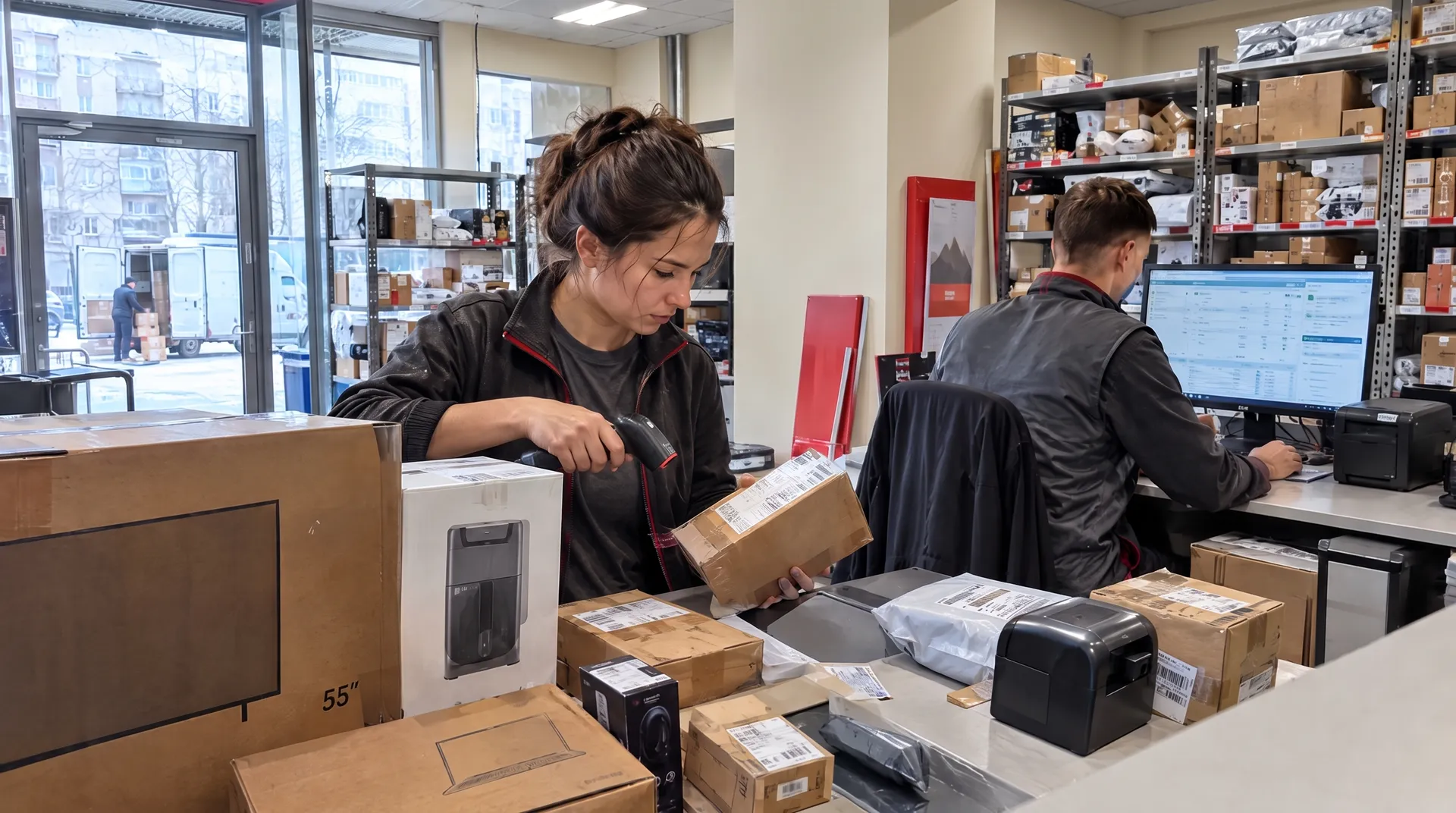
The total demand for warehouses in the country in January-June amounted to 1.7 million square meters, which is almost 51% less than in the same period of 2024. However, unlike other categories of tenants, it was multi-channel retailers that showed growth: their activity increased 1.5 times, reaching a record 607 thousand square meters. This provided them with a share of 35% of the total demand.
At the same time, online retailers, which previously held up to 60% of the market, have reduced their share to 30%. Their rental of warehouse space decreased by 75% year-on-year, amounting to only 519 thousand square meters. The reason was a shift in strategic focus: after a period of aggressive expansion, Internet companies began to optimize the use of existing logistics capacities.
Regional dynamics have also changed. Moscow and the Moscow Region still account for the majority of transactions - 891,000 square meters, but there has also been a 42% drop in activity. In St. Petersburg and the Leningrad Region, demand fell by 76%, to 70,000 square meters. A 57% decrease was recorded in key regional hubs, but developing regions retained second place with a result of 440 thousand square meters, where 87% of transactions accounted for multi-channel retail.
Experts emphasize that the warehouse real estate market is stabilizing after two years of rapid growth. The main players are now focused on rationalizing logistics, reducing costs, and improving delivery efficiency. According to IBC Real Estate forecasts, by the end of 2025, the volume of warehouse lease and purchase transactions will amount to about 4.5 million square meters, which is 28% lower than in 2024.
Experts expect that the current demand structure will continue in the next two years, and the market will gradually move into a phase of maturity, where priority will be given to the quality and accuracy of logistics solutions, rather than their scale.