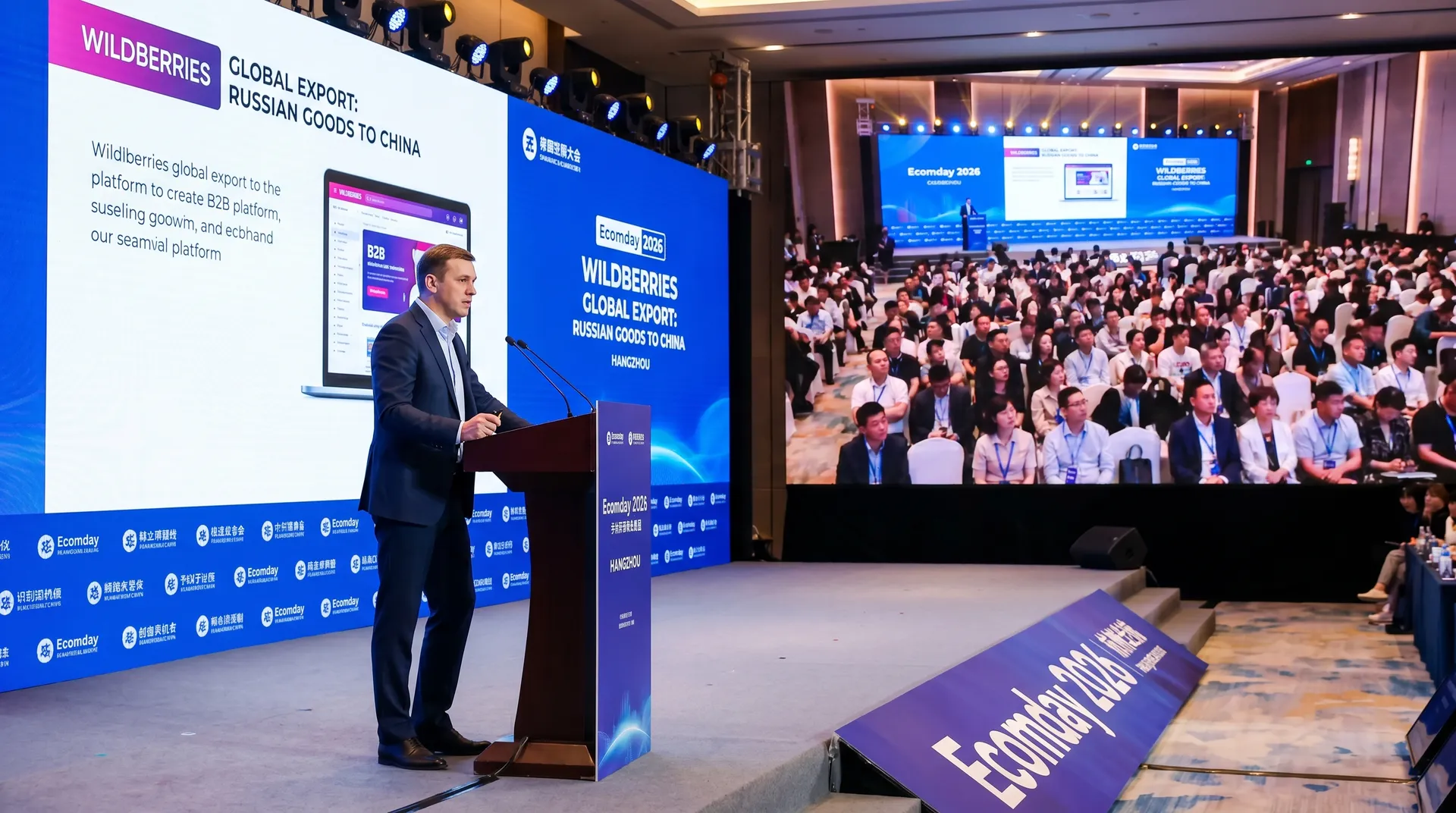
Wildberries has been working with Chinese sellers on the Russian market for a long time. Now there is a reversal: Russian manufacturers will be able to sell to China through the platform's infrastructure. The announcement was made in Hangzhou, one of the main centers of Chinese e—commerce.
How the new mechanism works
The model is B2B export. Chinese companies and entrepreneurs will be able to place wholesale orders for Russian goods online. The platform takes over logistics and customs support. Sellers receive the closing documents.
Nikolai Marakhovsky, Head of export from the Russian Federation at RWB, explained:
"We are consistently developing our international business and creating an infrastructure that helps Russian entrepreneurs enter new markets. China is one of the largest and most promising e—commerce markets in the world, and we see high interest in Russian products from local businesses and buyers."
At the current stage, a pilot is underway with the selection of participants through the application system. Further plans include full automation of the procurement process.
Why is this important right now?
Putin's visit to Beijing and the signing of 42 bilateral documents created a favorable political background. The trade turnover between Russia and China increased by 14.8% in the first quarter of 2026. Imports from China are growing faster than exports from Russia. The imbalance is obvious: China sells more to Russia than it buys. The Wildberries export mechanism is one of the tools for its adjustment.
From the point of view of the Chinese buyer: interest in Russian goods has existed for a long time — natural cosmetics, food, jewelry, children's toys, souvenirs. The problem has always been in the infrastructure: how to find a supplier, how to arrange documents, how to arrange delivery. Wildberries takes on this task.
What does this give Russian manufacturers?
Entering the Chinese market is a market with 1.4 billion consumers and the world's most developed e—commerce infrastructure. Self-access to Taobao or JD.com it requires serious investments, knowledge of the language and understanding of local specifics. Through Wildberries — with ready-made logistics, customs support, and without having to figure out Chinese regulations on your own.
The key question of the pilot is which categories will be in demand and to what extent the platform will be able to compete with the already established Chinese cross-border e-commerce channels for Russian brands.
How to get into the pilot
At the current stage — through the application system on the Wildberries platform. The selection process is based on categories and volumes. Manufacturers who want to test the export direction should apply now, while there is minimal competition for pilot seats.