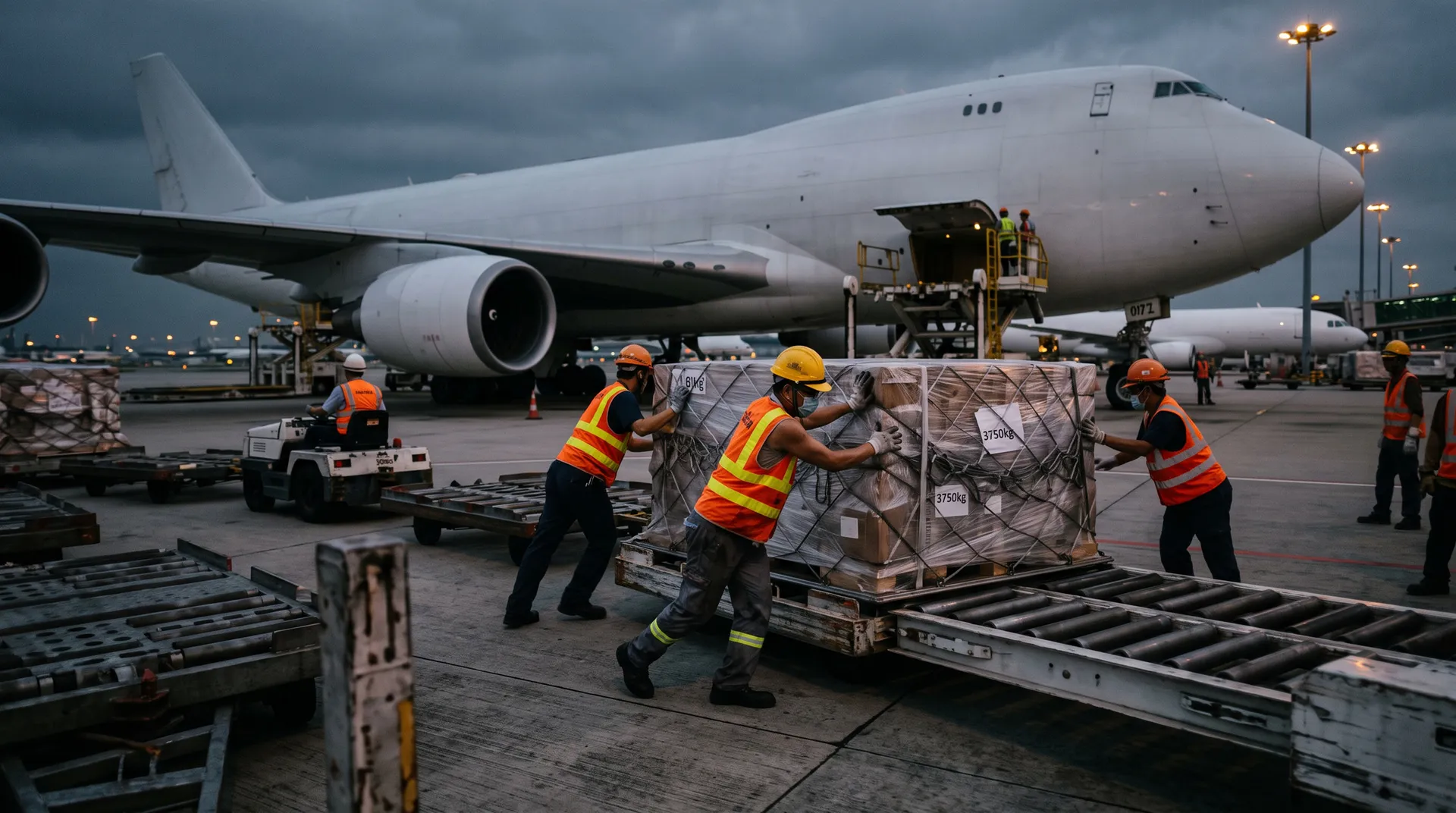
According to the TAC Index, the average rate (spot + contract) from Hong Kong to North America in September was $7.02 per kg compared to $6.98 in August. The Hong Kong —Europe route has risen in price more noticeably: from $4.58 to $4.80 per kg. The annual growth in the American direction is 31%, in the European direction — 8.8%.
In early October, the pace accelerated. The global Baltic Air Freight Index calculated by TAC increased 5% in the seven days to October 5 and turned out to be 25.5% higher than a year ago. Shipments from Hong Kong increased by 3% in a week (plus 22.3% year—on-year), from Shanghai - by 2.2% (plus 18.3% year-on-year). Growth accelerated, including on the eve of the "Golden Week" in China — the holiday weekend from October 1-7.
The dynamics are heterogeneous across the region. Rates increased from Japan and Seoul, while Taiwanese routes showed a decrease. In Southeast Asia, Vietnam gave an increase, but the Hanoi-Europe direction went into negative territory, and Bangkok also declined. Indian spots pulled back slightly, although the overall rate level from the country remained slightly higher than the previous week.
TAS explained the discrepancy in the rates by the structure of demand: the American direction is ahead of the European one, since there are shipments for the construction of data center infrastructure for the tasks of artificial intelligence.
"Such a jump was not unexpected after rates gradually rose throughout September, but they are still far from keeping pace with the sharp rise in jet fuel prices," TAC commented, pointing out that jet fuel prices have increased by more than 100% year—on-year amid the conflict between the United States and Iran.
The European direction is experiencing additional regulatory pressure. The EU has imposed a fee of €3 for a parcel worth less than €150, a measure aimed at preventing e-commerce flows from Asia and already constraining shipments to the region.
For importers purchasing goods in China and other Asian countries with air delivery, the fourth quarter traditionally means peak tariffs. This year, the fuel component and infrastructure demand from the United States are added to the seasonal factor. Companies planning urgent deliveries for the New Year sales should fix their bids in advance: according to TAC, growth will continue as the peak season deepens.
Related materials:
- Air cargo transportation in BRICS: pros, cons and cost — when is air delivery from Asia justified by the price
- Ethiopian Cargo has launched on the CargoAi platform: 30,000 freight forwarders have access to flights — where freight forwarders book flights at current rates
- RFS carriers have created the first international association of airlifters — how air cargo reaches European airports