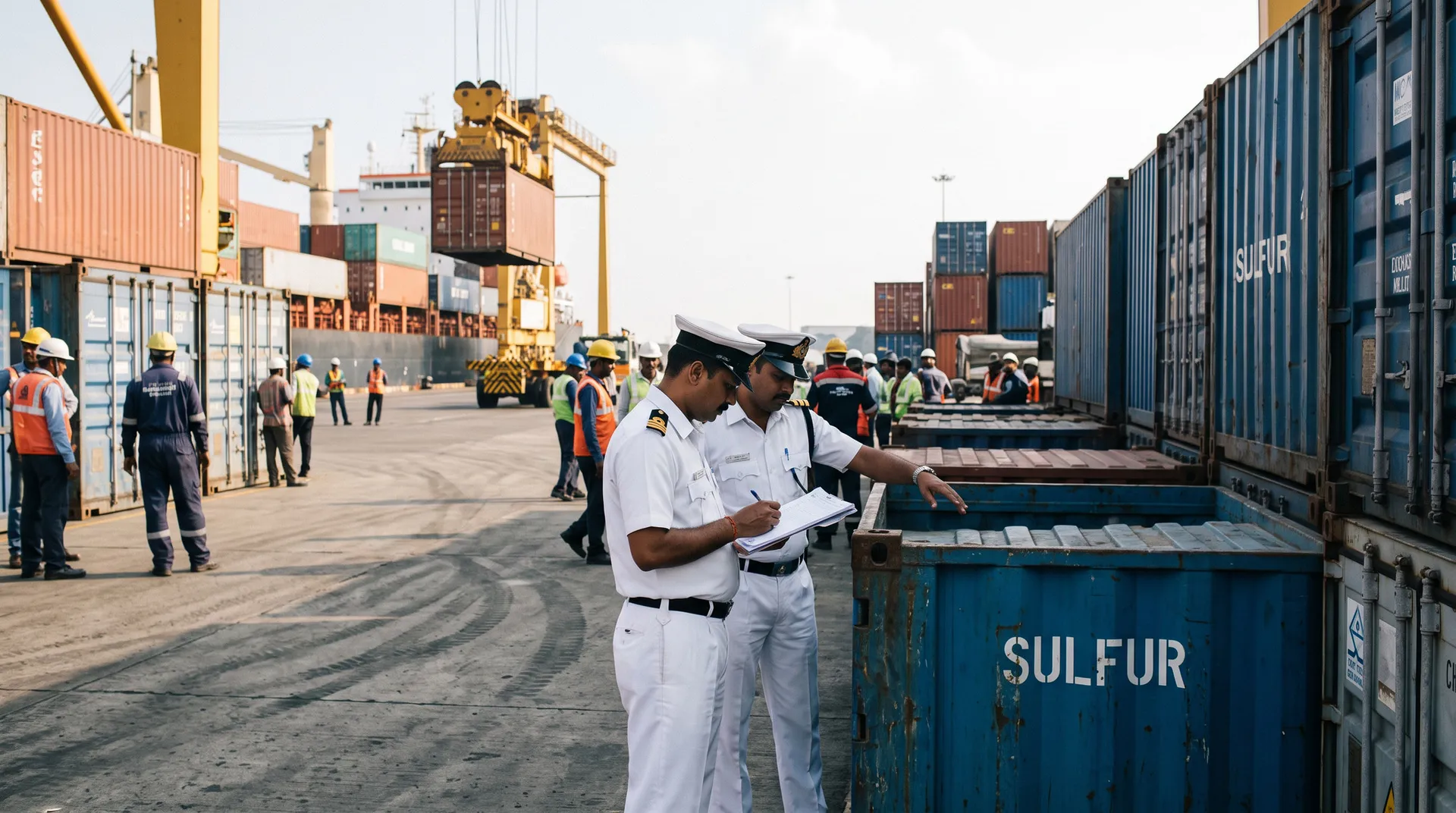
The investigation is registered as case no. CVD/OI/008/2026. The period covered by the audit is from April 1, 2025 to March 31, 2026. The applicant is OCCL Limited, the only Indian producer of insoluble sulfur.
The OCCL petition lists 79 subsidy programs of the central and provincial governments of the People's Republic of China. Among them are preferential loans, tax breaks, export financing, provision of land and electricity at low prices, and direct grants. According to the applicant, these measures allow Chinese exporters to sell goods below domestic Indian prices.
Insoluble sulfur is a polymer form of sulfur used as a vulcanizing agent in rubber products. More than 90% of India's domestic demand is generated by the tire industry.
The investigation is unfolding against the background of existing restrictions. In March 2025, DGTR recommended anti-dumping duties on insoluble sulfur from China and Japan; the Ministry of Finance introduced them in June 2025. A subsequent anti-absorption investigation, completed in September 2026, found that after the introduction of the anti-dumping duty, Chinese exporters lowered their selling prices without reducing production costs. This is qualified as an absorption of the fee, and its amount has been adjusted upward.
The Chinese side ignored the consultation meeting scheduled for September 28, 2026 in accordance with the WTO Agreement on Subsidies and Countervailing Measures. After that, DGTR initiated proceedings without the participation of the PRC.
All interested parties — Chinese manufacturers, importers, and domestic consumers — are required to register on the SETU portal and submit responses within 37 days of receiving the non-confidential version of the application. Failure to submit materials means that the decision will be made based on the available facts.
A multi-level system of restrictions is emerging for Chinese exporters and Indian importers of insoluble sulfur: an anti-dumping duty with an increased coefficient after an antiabsorption review, plus a potential countervailing duty following a new investigation. The deadline for its completion has not been set, however, ignoring the procedure by either party speeds up the decision on the available data.
Related materials:
- India has opened anti—dumping investigations on five Chinese goods - what other Chinese goods are India checking this fall?
- The EEC extended duties on tableware and springs from China — how the same protective measures against China work in the EAEU
- Chinese dumping is losing its power: how taxes are changing the marketplace market — how cheap Chinese imports are being fought in Russia