70% of failures are due to culture, not price.
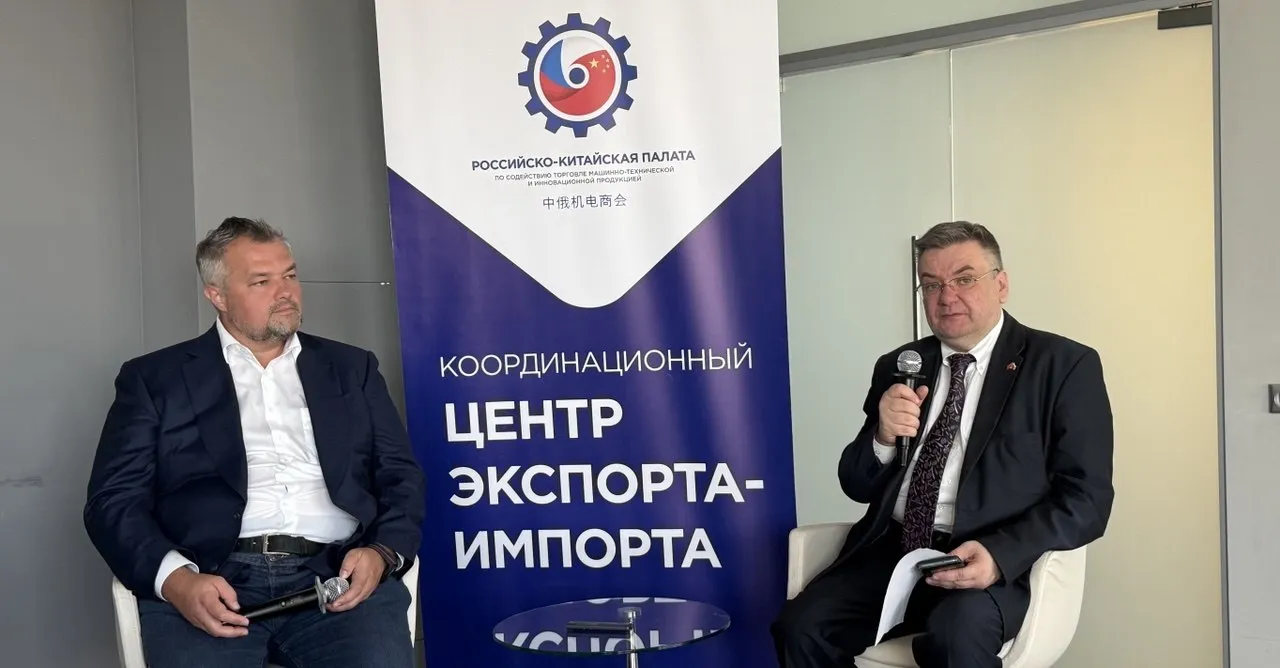
Maria Todosiychuk, an international coach in intercultural communication and founder of the Cultural Intelligence school, opened the second day's business session with harsh statistics: up to 70% of failures in international negotiations are due to cultural differences that the parties did not take into account. A significant part of transactions with Chinese partners do not reach the signing of a contract — not because of price or quality, but because of communication.
The speaker presented a map of the cultural distance between the countries. Russia is located in the middle zone of remoteness — in the same cluster with Slovakia, Croatia and Romania. China, Taiwan, and Hong Kong form a separate, internally homogeneous cluster. The greater the cultural distance, the higher the risk of communication failure, and the more important it is to deal with this gap consciously before starting negotiations, rather than after the first misunderstanding.
The main principle of survival is not to circumvent the rules, but to rebuild the model.
Evgeny Shabanov, CEO of Meta Transit LLC, which works in collaboration with Chinese partners Huawei, Weichai, Yuchai, Beiding Dingjiao and others, gave the audience a clear coordinate system for working in sanctions conditions.
"The main principle of survival is not to circumvent the rules, but to rebuild the model. Sustainable international business today is based solely on competent adaptation and absolute transparency for banking and customs control."
Shabanov debunked the main myth of the market: sanctions cannot be easily circumvented. The reality is different — they don't stop trading, but they make it more expensive and slower. There are eight zones of sanctions pressure that businesses work with: international settlements, bank compliance, insurance, export control, certification, logistics, access to technology, and contract terms.
Practical recommendation: invest more time in business processes. Companies that schedule deadlines "as before" regularly get into cash gaps and break contracts. The time buffer is a mandatory element of the business model in 2026.
A separate unit is a live case on machine tools. On June 30, 2026, Resolution No. 77 of the General Administration of Customs of the People's Republic of China came into force. Shabanov recommends three official sources for monitoring Chinese regulations: the website of the General Administration of Customs of the People's Republic of China. customs.gov.cn , A national foreign service platform en.ccpit.org and China International Trade Single Window singlewindow.cn .
The Russian brand in China: from registration to marketplace
Alina Rebechenko, Senior Project Manager at Mates China Agency, presented the full cycle of Russian brands entering the Chinese market. The agency closes six areas: SMM on WeChat, Weibo and Douyin; SEO and contextual advertising on Baidu; promotion through KOL and streamers with the organization of blog tours; launch of stores on marketplaces Tmall, Taobao, JD, Pinduoduo and Douyin Shop - with and without a legal entity in China; promotion on video hosting Bilibili, Youku and Xigua; PR campaigns in Chinese media.
MSU in China: Grants, Contests, and the Seven Keys to Success
Vasily Petrechenko, Deputy General Director of the MSU Science Park, presented one of the most informative reports of the second day. The Science Park is one of the first technoparks in Russia, founded in 1992. Today, there are 50 mature residents and about 100 startups at an early stage. Since 2016, the focus has shifted to the Global South — China, India and the BRICS countries.
In China, the park operates according to two models. The first is to help startups through a free innovation competition: finalists will attend roadshows in Beijing, Shenzhen and Singhen in October. In 2025, two Russian companies received prizes of 600,000 yuan each. The second model is consulting for mature companies: the search for partners and clients, the opening of legal entities, operational support. The park's partner network includes the Beijing Association for International Exchanges, Tsinghua University and the Shenzhen Robotics Association.
Petrechenko also presented the program of the Chinese New Era Science and Innovation Incubation Park in Xiamen, the BRICS international hub. Key tools for Russian companies: grants for research up to 10 million yuan, support for SMEs up to 3 million yuan, subsidies to academics for opening a laboratory — 1.5 million yuan, Su Song Cup competition with prizes up to 1 million yuan.
According to Petrechenko, the seven keys to success in China are: an "In China for China" strategy with full localization; integration into ecosystems instead of single sales; choosing the right type of partner — public sector, private capital or local operator; speed and flexibility — development cycles in China are shorter than Western ones; registration of patents and trademarks is strictly up to market entry; offering unique technologies that complement the Chinese market rather than competing with cheap counterparts; reliable logistics and supply chains.
Announcement: forum marathon in Ulaanbaatar
Moderator of the conference Pavel Ustyuzhaninov concluded the two-day program with the announcement of the September marathon of forums in Ulaanbaatar. The bilateral Russian-Mongolian Forum of Regions will be held on September 14-15. Representatives of more than 15 regional administrations attended the conference. September 16-20 — trilateral forum of Russia, China and Mongolia.
"Moscow State University, as the main Russian university, should become an example for higher education and secondary vocational education — this is now critically important for maintaining the Russian economy."