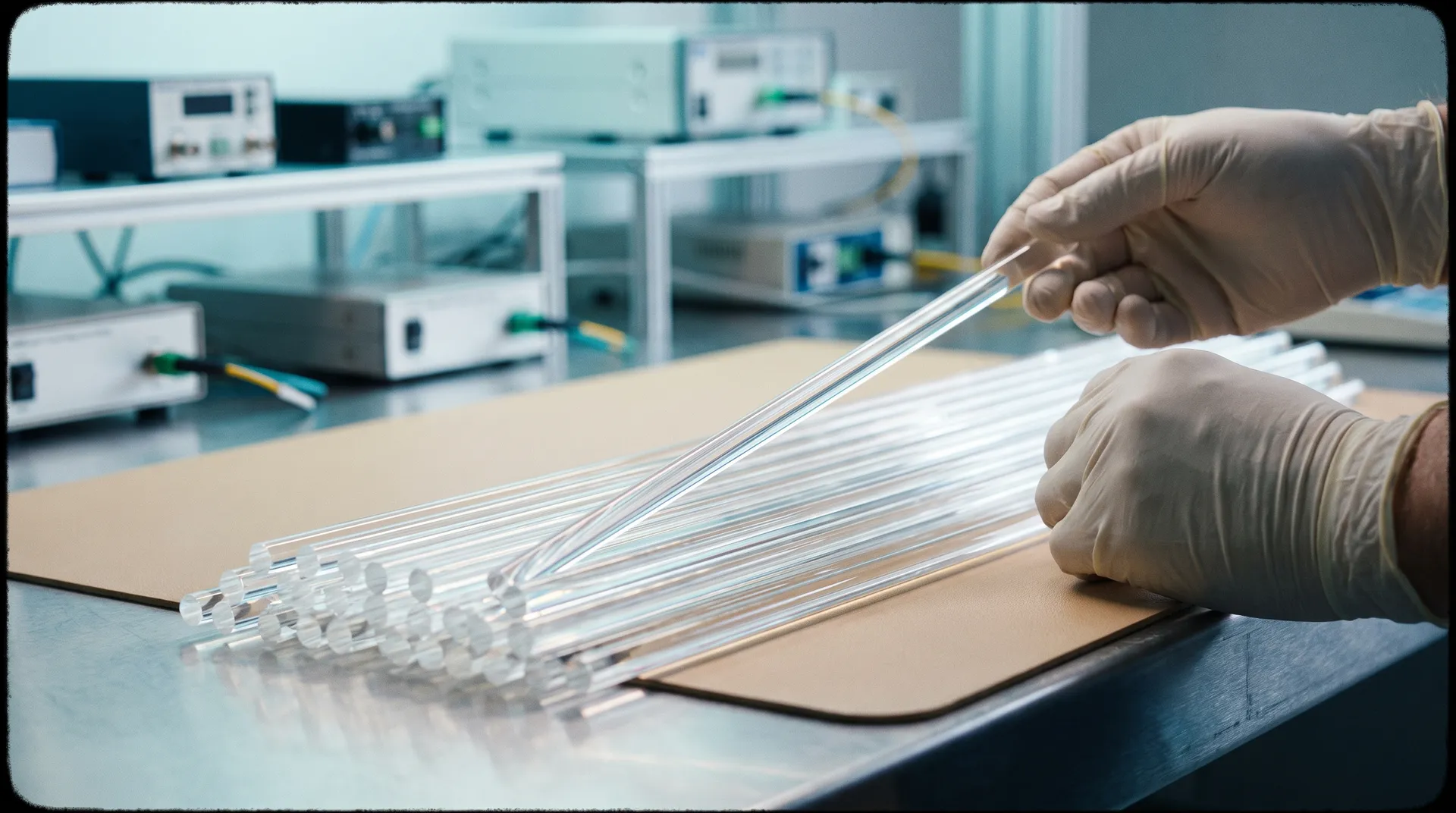
The EEC Board, by decision No. 93 of July 14, 2026, established a temporary zero rate of import customs duty on bars of optical glass. The reset is valid until December 31, 2027 inclusive.
We are talking about blanks — optical rods, which serve as raw materials for the extraction of optical fiber and the production of optical elements. For manufacturers, this is the basic input material, and the duty rate on it directly falls into the cost of the final product: fiber-optic cable, components for telecommunications and instrumentation.
Zeroing the rate on raw materials is a typical instrument of the EEC to support processing within the Union. When there is not enough in-house production of the desired quality of the billet, the import duty works against the processor, increasing the cost of entry. Removing the rate for a certain period of time reduces the cost of raw materials and makes the production of finished products on the territory of the EAEU more cost-effective compared to the import of finished cable.
The horizon until the end of 2027 gives a planning signal. More than a year and a half is enough time to start regular supplies of blanks at a zero rate and calculate the economics of production on this incoming material.
Importers and manufacturers of optical fiber should do several things. The first is to check whether the imported item falls exactly into the HS item covered by decision No. 93; the description must match the tariff item, and not just the household name of the product. The second is to recalculate the cost of import without duty and, if deliveries are regular, review the contractual volumes for the horizon until the end of 2027. The third is to include in the procurement plan the possibility that after December 31, 2027, the rate will return to the base, and not build a long—term economy based on indefinite zeroing.