Mongolia's Free Economic Zones: what benefits businesses receive and where the free zone regime ends
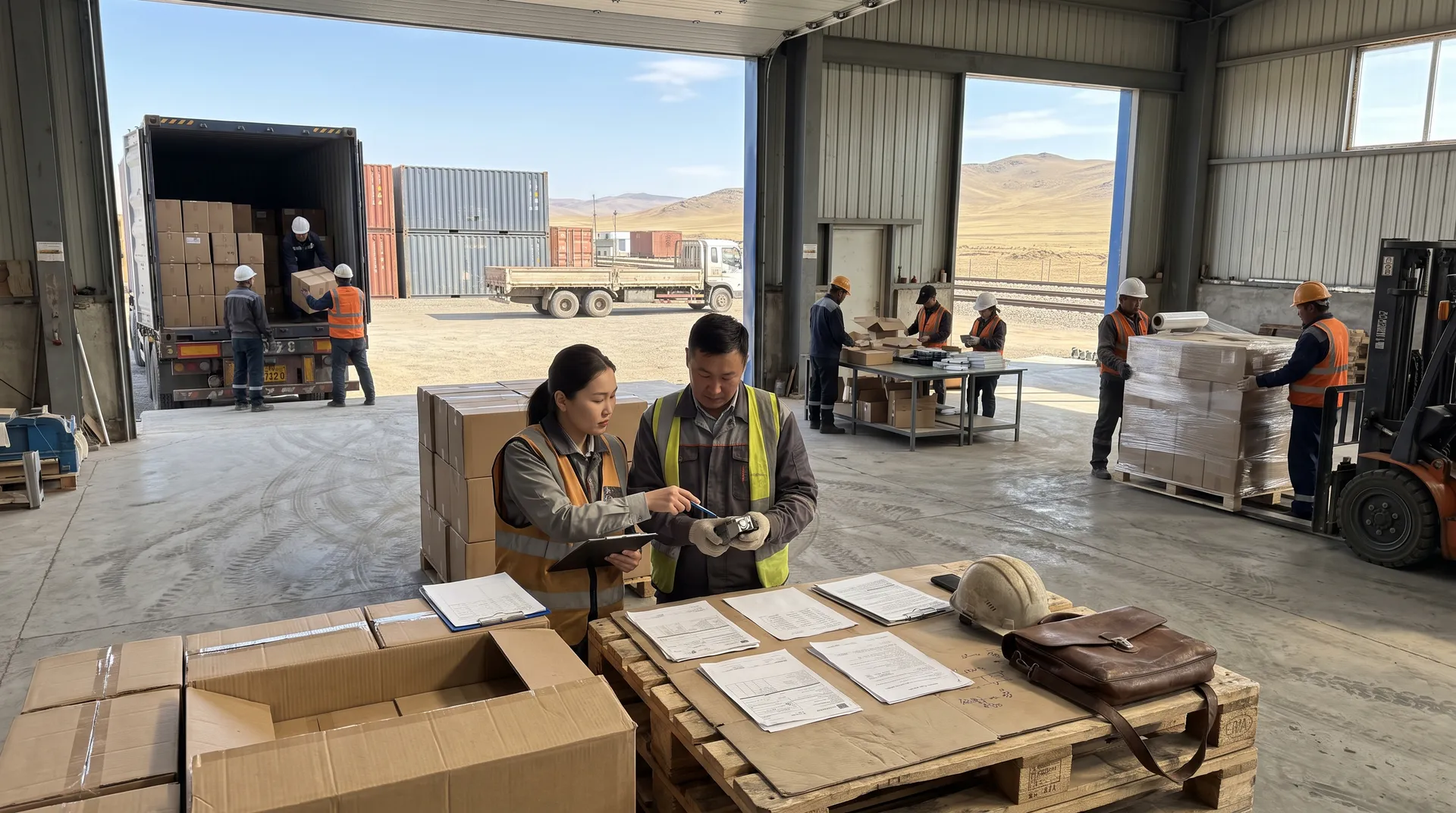
The key principle. A free zone can exempt a product from part of the payments while it is inside the zone. It does not convert a foreign product into a Mongolian product and does not guarantee duty-free release in Russia, China or in the main territory of Mongolia.
What free zones exist
The state agency Invest Mongolia indicates four free zones. The level of their infrastructure readiness varies, so the legal regime must be checked along with the actual site conditions.
| The zone | Orientation | Business logic | What to check |
| Altanbulag | The border with Russia | Warehouse, trade, light processing, northern corridor | Infrastructure, land, Kyakhta—Altanbulag transition mode |
| Zamyn-Oud | The border with China | Chinese supplies, terminals, production and re-export | Throughput, congestion, communication with Erlang |
| Tsagaannuur | The West of Mongolia | Regional trade, tourism, Western routes | Cargo base, remoteness, access to markets |
| Khushigiyn hundiy | Ulaanbaatar Airport | Logistics of expensive goods, services, tourism | Implementation stage, infrastructure, and permitted activities |
How does the law define a free zone
The law of Mongolia considers the free zone as a special territory, which for the purposes of customs duties and a number of taxes is considered to be located outside the customs territory of the country. Special rules for registration, customs control, taxation, currency settlements, entry and employment may apply in the zone.
What benefits are directly provided for
- Goods from abroad are exempt from import tax, customs duty, VAT and excise duty for the period of stay in the zone regime.
- When goods are exported from the zone outside Mongolia, no tax is charged according to the rules of the law on free zones.
- Goods and services produced by the participant within the zone are exempt from VAT under a special regime.
- For trade, tourism and hotels — exemption from land fees for 5 years, 50% discount for the next 3 years; for infrastructure and production — exemption for 10 years.
When goods are brought to the main customs territory of Mongolia, the usual duties and taxes are applied. The zone is convenient for storage, processing and subsequent export, but it does not cancel the calculation of the final customs load.
What has changed the EAEU—Mongolia agreement?
The Interim Trade Agreement between the EAEU and Mongolia entered into force on July 22, 2026. For three years with the possibility of automatic renewal, the parties have reduced or reset the rates for 367 commodity subheadings on each side. This is not a free trade zone for all goods — first you need to check the specific code in the tariff list.
The preference is granted only to goods of origin of the EAEU or Mongolia. A product can be considered originating if it is fully sourced in the country, produced only from originating materials, or meets the recycling criterion: the cost of non-originating materials does not exceed 50% of the FCA price, or there has been a change in the trademark position at the level of four HS characters. The origin is confirmed by an EAM certificate; for shipments of up to 5,000 euros, a declaration on a commercial document is allowed.
Why doesn't a simple repackage create an origin
The Mongolian law separately defines the goods produced in the zone through the share of value added. But for the application of the agreement with the EAEU, the rules of origin of the agreement itself are crucial. Sorting, labeling, repackaging, or formally changing the seller usually does not create enough recycling.
"The China—Mongolia—Russia Free Zone scheme should start not with a route, but with a production map. If the origin criterion is not met, the Russian customs will apply the usual rate, even if the goods were physically located in Mongolia."
Five legal mistakes
- Consider the whole of Mongolia a free zone. The special mode operates within the established boundaries of a specific site.
- To confuse transit and origin. The route through the country does not change the country of origin of the product.
- Do not check the code in the appendix to the agreement. The preferences apply only to a limited list of subheadings.
- Calculate only the tax benefit. Infrastructure, overloading, storage, and time can make a project more expensive than direct delivery.
- To sign a memorandum without assigning roles. The contract must specify the importer, the manufacturer, the owner of the goods and the party confirming the origin.
Legal checklist before the first delivery
- Determine the final market and customs procedure in each country.
- Confirm the HS/HS code and the rate according to the annex to the agreement.
- Make a calculation of the origin and a technological map of operations.
- Check the registration of the zone participant, land, licenses and infrastructure contracts.
- Coordinate the EAM form, invoices, transport documents, and proof of direct delivery.
- Check the technical, sanitary and veterinary permits in the end market.
- Calculate the scenario without preferences as a stress test of the project economy.
On September 14, a separate session of the Forum of Regions is dedicated to the implementation of the EAEU—Mongolia Interim Trade Agreement. This is an opportunity to receive answers from representatives of departments about specific codes, issuing authorities of the EAM form and confirmation of direct delivery.